Golden Jojoba Oil Quality: Key Details to Check
Golden jojoba oil is not an oil at all. This fundamental distinction is the first and most critical quality marker.
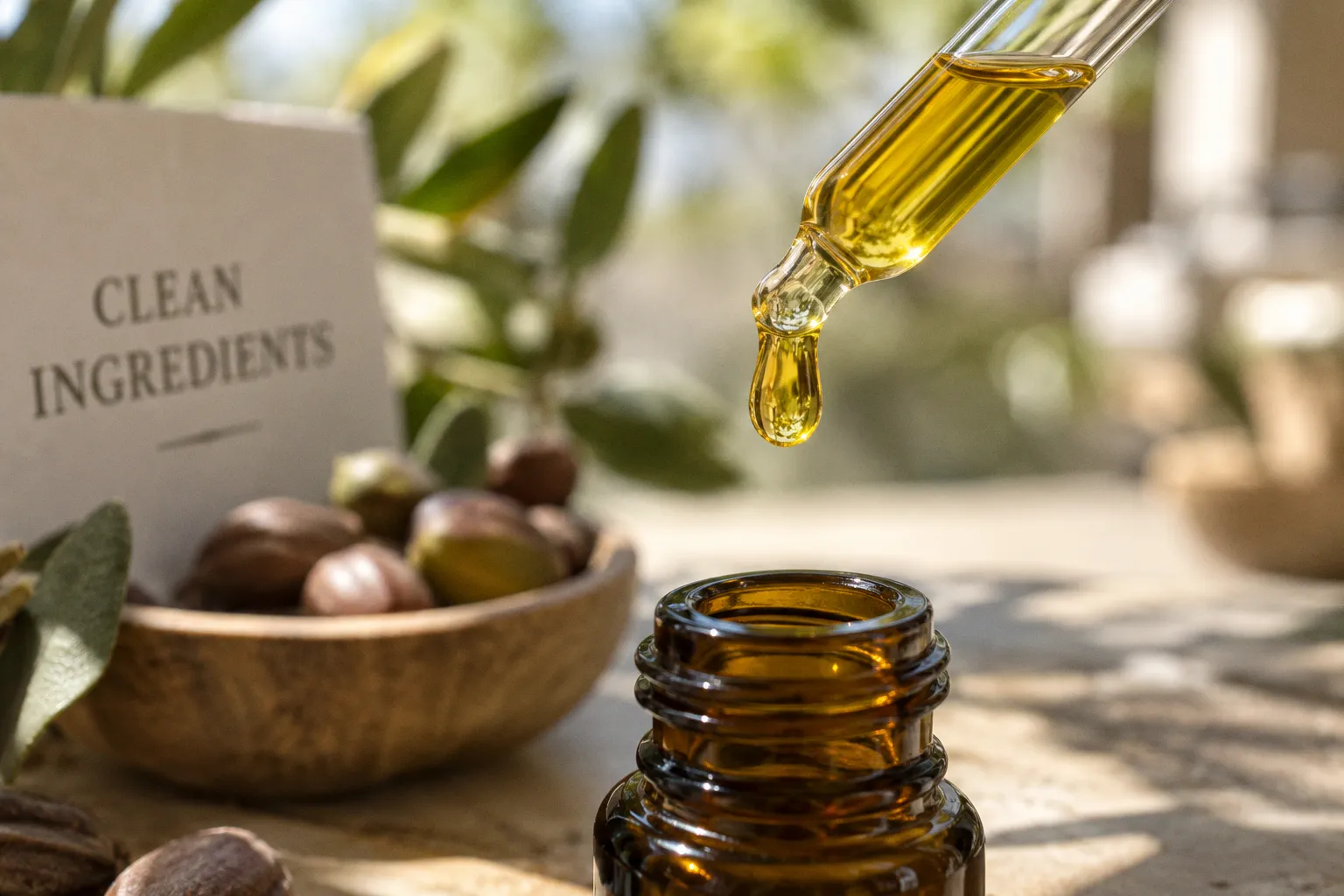
Triglycerides compose true oils; jojoba is a liquid wax ester, a molecular structure that dictates its stability, shelf life, and interaction with skin. Identifying high-grade material requires moving past vague claims of "cold-pressed" and "unrefined" to examine specific chemical and physical parameters.
The Chemistry of Liquid Wax Esters: Why Jojoba Is Unique
Pure golden jojoba oil (Simmondsia chinensis seed oil) is composed of approximately 97% mono-esters of long-chain fatty acids and alcohols. This wax ester structure is the reason for its exceptional oxidative stability. Unlike triglyceride oils, which are prone to rancidity due to their ester bonds, the wax ester bond is more resistant to hydrolysis and oxidation.
This composition directly impacts formulation. When blended with other carrier oils, jojoba does not accelerate their degradation. Its lipid profile closely resembles the wax esters found in human sebum, allowing it to integrate into the skin's lipid barrier without disrupting its structure. This is not a "nourishing" quality in marketing terms; it is a predictable biochemical compatibility.
Decoding the International Jojoba Export Council Standards
Without a standardized benchmark, quality assessments are subjective. The International Jojoba Export Council (IJEC) provides this benchmark. The following parameters are non-negotiable for a product labeled as high-grade golden jojoba oil:
- Acid Value: Maximum 1.0 mg KOH/g. This measures free fatty acids, which indicate hydrolysis or improper processing. A low acid value confirms stability and a lack of degradation.
- Peroxide Value: Maximum 5.0 meq O₂/kg, with premium specifications capping this at 2.0 meq O₂/kg. This measures initial oxidative rancidity. The lower the value, the fresher and more stable the oil.
- Color (Gardner Scale): Maximum 9.0 units (ISO 15305 / AOCS Td 1a-64 testing). This defines "golden." A color darker than 9 suggests degradation or the presence of impurities. Refined or bleached jojoba will have a lower Gardner number, often approaching water-clear.
- Moisture Content (Karl Fischer): Maximum 0.1%. Excess water supports microbial growth and can destabilize formulations.
A peroxide value above 5.0 meq O₂/kg signals oxidative breakdown has commenced. At this stage, the oil's efficacy as a barrier-compatible lipid is compromised.
Fatty Acid Profiles and the Gadoleic Acid Benchmark
The fatty acid profile is the oil's chemical fingerprint. While minor variations exist based on geographic source and harvest conditions, a pure cold-pressed golden jojoba must fall within specific ranges:
| Fatty Acid | Carbon Chain | Expected Range |
|---|---|---|
| Gadoleic Acid | C20:1 | 65.0% – 80.0% |
| Erucic Acid | C22:1 | 10.0% – 20.0% |
| Oleic Acid | C18:1 | 5.0% – 15.0% |
Gadoleic acid (C20:1) is the dominant mono-unsaturated fatty acid. Its high concentration contributes to the oil's oxidative stability and low comedogenic potential. A significant deviation from this profile, particularly a lower gadoleic percentage and higher oleic percentage, suggests adulteration with other vegetable oils or inferior sourcing.
Physical Indicators: Color, Clouding, and Refractive Index
Physical observations, when paired with data, are powerful quality indicators.
- Color and Clarity: At room temperature, it should be a clear yellow to golden liquid. A greenish tint may indicate chlorophyll retention, while excessive darkness points to oxidation or high-temperature processing.
- Clouding and Solidification: Pure jojoba has a melting/freezing point between 7°C and 10.6°C (45°F–51°F). It will naturally cloud or solidify when stored in cool conditions. This is a physical property of wax esters, not a sign of spoilage. It should return to a clear liquid upon gentle warming.
- Specific Gravity: 0.860–0.873 g/ml at 25°C. This density measurement can indicate purity.
- Refractive Index: 1.450–1.470 at 40°C. A value outside this narrow band suggests the presence of other substances.
| Parameter | Standard Value | What It Tells You |
|---|---|---|
| Specific Gravity (25°C) | 0.860–0.873 g/ml | Confirms oil density and potential purity |
| Refractive Index (40°C) | 1.450–1.470 | Verifies optical properties of the wax esters |
| Iodine Value | 80–92 g I₂/100g | Measures degree of unsaturation |
| Saponification Value | 85–98 mg KOH/g | Indicates average molecular weight of esters |
Assessing Oxidative Stability: Acid and Peroxide Value Limits
The ultimate test of quality is time and resistance to degradation. The key figures here are the acid and peroxide values. A high saponification value (85–98 mg KOH/g) indicates a relatively low average molecular weight, while a high unsaponifiable matter content (45%–55%) is characteristic of jojoba and contributes to its skin feel.
For the formulator or informed buyer, the acid and peroxide values are the primary red flags. An acid value climbing above 1.0 indicates hydrolysis is occurring—water is breaking the wax ester bonds. A rising peroxide value indicates oxygen is attacking the unsaturated bonds. Both processes diminish the oil's functional benefits and can introduce irritants.
The stated shelf life of 2 to 3 years in a sealed, original container is achievable only when these initial values are low. Once opened, exposure to heat, light, and oxygen will accelerate degradation regardless of initial quality. A small, nitrogen-flushed bottle from a supplier who publishes batch-specific analysis reports is a more reliable indicator of quality than any marketing claim.
High-grade golden jojoba is defined by its chemical ledger—low acid and peroxide values, a gadoleic-dominant profile, and the physical trait of solidifying near room temperature. These are verifiable data points, not sensory promises.
The absence of triglycerides (<1%) is another hallmark. If a product claims to be jojoba but behaves like a typical oil in stability tests, it is either adulterated or not what it purports to be. Sourcing from producers who adhere to and can document IJEC or similar standards is the only consistent method to ensure you are starting with a stable, effective, and pure wax ester for your skincare formulation or routine.