Cold-Pressed Tamanu Oil: What to Inspect Before Use
The first time I opened a true bottle of cold-pressed tamanu oil, I paused before using it. The oil pooled into my palm in a deep, almost ink-stained green, and the scent rose immediately: warm, resinous, faintly nutty, with a medicinal edge.
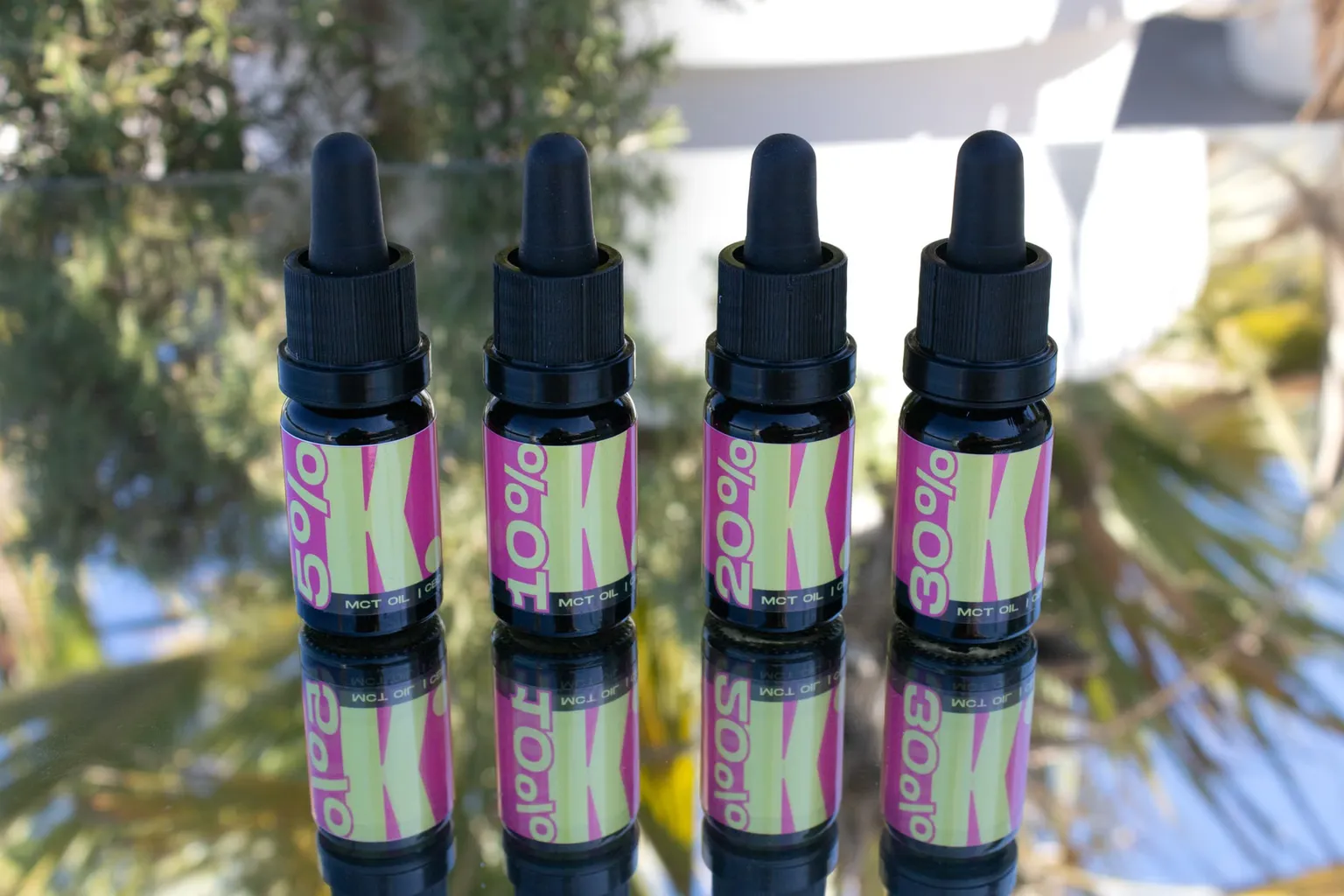
It was nothing like the pale golden liquid I had been working with before. That sensory difference taught me more about quality than any ingredient card could.
A genuine virgin tamanu oil announces itself through the senses long before it meets the skin. Once you learn the language of its color, viscosity, aroma, and response to temperature, you become less dependent on the front label to explain what is inside the bottle.
Cold-pressed tamanu oil comes from the kernels of Calophyllum inophyllum, a coastal tree whose nuts are traditionally laid out to cure in the sun before pressing. The kernels may remain in the open air for one to two months. During that time, they darken and develop the resinous character associated with the finished oil. The cured kernels contain a substantial resinous fraction, along with neoflavonoids and pyranocoumarins such as calophyllolide, a compound first isolated from tamanu seeds in the mid-twentieth century.
That curing stage is not a decorative part of the story. It helps explain why two oils made from the same species can look, smell, and behave so differently. The inspection that follows is really an attempt to trace the production process backwards: from the bottle in your hand to the way the kernels were cured, pressed, stored, and possibly refined.
The Sun-Curing Process and Its Impact on Bioactive Resins
Fresh tamanu kernels are pale and comparatively mild in aroma. The traditional curing period changes their appearance and texture before any oil is extracted. Over several weeks, the kernels become darker, softer, and more resinous. The finished oil inherits that transformation.
The chemistry is more complicated than simply drying a nut in the sun. Enzymatic and oxidative reactions continue within the kernel as it is exposed to air and warmth. These reactions help convert precursor compounds into the neoflavonoids and pyranocoumarins that distinguish tamanu from an ordinary carrier oil. Calophyllolide is one of the best-known compounds in this group, but it is not the only component responsible for tamanu's character.
This is why the curing story matters when you are assessing cold pressed tamanu oil quality. A batch made from fully cured kernels is more likely to have the dark color, heavy body, and pronounced resinous aroma associated with unrefined oil. An accelerated process may still produce a usable oil, but visual darkening alone does not prove that the same chemical changes have taken place.
Sun curing and oven drying should not be treated as interchangeable descriptions. Heat can change the appearance of the kernels quickly, while the slower interaction of time, air, and moderate warmth may be important to the development of the resinous fraction. A supplier who can explain whether the kernels were traditionally sun-cured, mechanically pressed, and left unrefined is giving you more useful information than one who relies only on words such as natural or premium.
The curing period also varies by producer and region. A one-to-two-month description is a useful traditional reference, not a universal certification standard. It should be read alongside the rest of the evidence: the oil's color, smell, texture, batch information, packaging, and storage history.
Cold pressing is equally important. Mechanical pressing can preserve the compounds that give crude tamanu oil its personality, whereas solvent extraction and later processing may produce a more uniform material. The word cold-pressed, however, should not be treated as a complete guarantee by itself. It tells you something about the extraction method, but not necessarily whether the oil was subsequently bleached, deodorized, filtered heavily, or stripped of resin.
The strongest quality story is not a single word on the label. It is the agreement between the curing method, the pressing method, and what your senses find in the bottle.
Visual and Olfactory Markers of Unrefined Tamanu Oil
Pour a small amount of oil into clear glass and hold it against a white background. Unrefined, cold-pressed tamanu oil commonly ranges from deep green to greenish-brown. Oils made from thoroughly cured kernels often sit toward the darker, earthier end of that range.
The color comes from the retained resinous material and other naturally occurring constituents. It is not, by itself, evidence of contamination. In fact, a very pale golden oil deserves more questions than a dark one. Light color can indicate that the oil was refined, bleached, deodorized, or deresinated. It does not prove that processing has taken place, but it is inconsistent with the usual appearance of a fully unrefined tamanu oil.
Color should be considered with the rest of the sensory profile:
- Deep green or greenish-brown is consistent with a resin-rich, unrefined oil.
- Pale olive or muted green may indicate lighter curing, a different batch, or some degree of processing.
- Clear golden yellow is more typical of a refined or heavily processed product than of virgin tamanu.
- Unexpectedly cloudy oil at room temperature may reflect cool storage, natural waxes, or temperature fluctuation rather than spoilage.
Tamanu is also heavier than many familiar carrier oils. It moves slowly across the palm and may feel closer to a thin balm than to grapeseed or jojoba oil. The body comes from its fatty acids, waxes, and resinous components. A light texture does not automatically mean that a product is fake, but an oil that pours and spreads like a very thin, neutral carrier deserves closer inspection.
The aroma is often the clearest marker. Pure cold-pressed tamanu usually has a resinous, nutty smell with a faintly medicinal or woody quality. Some batches smell sharper; others are rounder and more roasted. The exact profile can vary with the source, curing process, age, and storage conditions.
What it should not smell like is almost as informative. A completely neutral oil, a generic cosmetic scent, or a pronounced fragrance added to disguise the raw material can point to refining or formulation. A rancid, paint-like, sour, or stale smell is a different problem: it may suggest oxidation or poor storage rather than refinement.
No single sensory sign proves purity. The phrase pure tamanu oil color and smell is useful only if it is understood as a combined assessment. A dark color can be imitated, and aroma can be altered. The most reliable reading comes from several markers pointing in the same direction.
A practical comparison
| Quality marker | Unrefined, cold-pressed tamanu oil | Refined or deresinated tamanu oil |
|---|---|---|
| Color | Deep green to greenish-brown | Pale yellow or light golden |
| Viscosity | Heavy, slow-pouring, sometimes balm-like | Lighter and more fluid |
| Aroma | Resinous, nutty, woody, faintly medicinal | Neutral, faint, or generic |
| Natural waxes and resins | Usually retained to a noticeable degree | Reduced or removed |
| Cool-temperature behavior | May cloud, thicken, or form sediment | More likely to remain clear |
| Sensory consistency | Distinctive and variable from batch to batch | More uniform and subdued |
The table is not a laboratory standard. It is a first-pass reading. A sensory inspection can reveal that a bottle does not behave like unrefined tamanu, but it cannot identify every adulterant or confirm the concentration of a particular compound.
Understanding Temperature-Induced Sedimentation and Cloudiness
Temperature is where many people mistake natural behavior for a defect. Below roughly 21°C (70°F), unrefined tamanu oil may become cloudy, thicker, or visibly layered. Soft sediment can collect at the bottom of the bottle. A liquid that looked uniform on a warm day may appear hazy or semi-solid after being stored in a cool room.
This happens because the oil contains constituents with different melting and crystallization points. Natural waxes, fatty acids, and resinous materials do not all remain fluid at the same temperature. As the oil cools, some begin to crystallize or separate from the liquid phase. The result may be a veil of cloudiness, small flakes, streaks along the glass, or a soft layer of heavier material at the bottom.
The stearic acid fraction is one contributor to this behavior and may reach a substantial level in tamanu oil. It is not the only reason for sedimentation, and the appearance of sediment should not be used to calculate the composition of a particular bottle. The important point is that cold storage can make a resin-rich oil look dramatically different without making it unsafe or spoiled.
This is the useful part of the unrefined tamanu oil sediment question: sediment can be compatible with a minimally processed oil. It is not proof of authenticity, but complete clarity under every condition is not necessarily a virtue either. Refining and deresination remove many of the materials responsible for clouding, so a processed oil may stay clear where an unrefined oil becomes opaque.
A cold test can therefore serve as a clue, not a tamanu oil purity test in the strict sense. Place the closed bottle in a cool environment for a limited period, then observe whether the oil clouds, thickens, or develops sediment. Allow it to return to room temperature and see whether the appearance becomes more uniform again. This may tell you something about the natural waxes and resins that remain, but it cannot rule out dilution, oxidation, contamination, or other quality problems.
Do not use a cold test as the only reason to approve or reject a product. A bottle may stay relatively clear because of its specific fatty acid profile, storage temperature, filtration, or batch variation. Conversely, unusual particles, a sour odor, mold-like growth, or a change that does not resolve at warmer room temperature should not be dismissed as normal sediment.
If you want a clear pour for facial care, beard care, or a body blend, warm the closed bottle gently in a bowl of warm water. Rolling it between your palms can help distribute the softened material. Avoid microwaves, boiling water, a stovetop, or direct contact with a heating element. High and uneven heat is difficult to control, particularly in a small bottle, and it can expose the oil to unnecessary thermal stress.
The important correction is that repeated warming and cooling should not be treated as automatically harmless. Gentle temperature changes are generally less concerning than high heat, but there is no sound basis for promising that a bottle can be cycled dozens of times with its bioactive profile remaining unchanged. Stability depends on the temperature reached, the time spent there, exposure to oxygen and light, the amount of headspace in the bottle, and the condition of the oil to begin with.
Warm the amount you need rather than repeatedly heating the entire bottle. Keep the cap closed during warming, avoid leaving the oil in a hot place, and pay attention to any later change in odor or color. Without analytical testing, you cannot confirm that the bioactive composition has remained unchanged after repeated handling.
Distinguishing Natural Virgin Oil from Industrial Refinement
Refining has a legitimate purpose. It can make an oil more uniform, lighter in color, less aromatic, and easier to use in products where a strong raw-material smell would be unwelcome. The problem is not that refined tamanu exists. The problem is when a refined oil is presented as though it were an unrefined virgin oil.
Bleaching can reduce the dark pigments and visual intensity. Deodorizing can remove much of the distinctive aroma. Deresination can reduce the heavy, sticky fraction that gives tamanu its characteristic body and cool-temperature behavior. After these steps, the oil may be easier to formulate, but it is no longer sensible to judge it by the same expectations as a resin-rich virgin oil.
The front label often leaves out these distinctions. Words such as natural, pure, botanical, and cold-pressed can appear together while still failing to explain what happened after extraction. Look for more specific information:
- whether the oil is described as virgin or unrefined;
- whether the kernels were sun-cured before pressing;
- whether extraction was mechanical rather than solvent-based;
- whether the oil was filtered, bleached, deodorized, or deresinated;
- whether the botanical name is given as Calophyllum inophyllum;
- whether the batch, production date, and storage guidance are available;
- whether the seller can explain why the oil looks and smells the way it does.
A supplier does not need to promise that every bottle will have exactly the same color. Natural oils vary. In fact, a rigid claim of perfect visual uniformity may be less convincing than an explanation of normal batch variation. What matters is whether the supplier can describe the variation without using it to avoid basic questions about processing.
Packaging is part of the quality picture as well. A dark, tightly closed container offers better protection from light than a clear bottle left on a bright shelf. A narrow opening reduces the amount of air entering during repeated use. Large bottles may be economical, but they create a longer period in which oxygen, warmth, and handling can affect the oil.
This is where shelf life needs a less tidy explanation than a single number. Cold pressed tamanu oil shelf life depends on the initial quality of the oil, packaging, exposure to heat and light, and how often the bottle is opened. Follow the supplier's stated best-before date, store the bottle in a cool, dark place, and do not assume that a natural oil remains unchanged simply because it has not visibly separated.
A small bottle that is used regularly may be a better choice than a large bottle kept half-full for a long time. If the aroma shifts from resinous and nutty to sharp, stale, or paint-like, stop treating the change as a normal variation. Oxidation is not corrected by warming the oil or shaking the bottle.
Fatty Acid Profiles and the Reality of UV Protection Claims
The fatty acid composition helps explain why tamanu oil feels substantial on the skin. Commonly cited ranges place oleic acid around 30–55%, linoleic acid around 15–45%, palmitic acid around 5–20%, and stearic acid around 5–25%. These figures are broad rather than a promise about every bottle. Cultivar, growing conditions, curing, extraction, and analysis method can all influence the result.
Oleic and linoleic acids give the oil a useful balance of richness and spreadability. Oleic acid is associated with a more permeable, conditioning feel, while linoleic acid contributes to the lipid profile of the skin barrier. Palmitic and stearic acids add body and help explain why tamanu can feel heavier than many fast-spreading facial oils.
That composition is one reason tamanu works well in richer skincare, dry-skin preparations, beard oils, and balm-like products. It can bring cushioning and weight to a formula that would otherwise feel too thin. It is not automatically the right choice for every face, however. The resinous aroma can be intense, and a rich, active oil may be irritating or uncomfortable for some users. Patch testing remains more useful than assuming that natural origin equals universal tolerance.
The UV discussion needs the same restraint. Laboratory testing has reported a mild inherent UV-protective effect in unrefined tamanu oil, with measured values around SPF 6.3 ± 0.4 in one set of testing conditions. That result is interesting, but it does not turn tamanu into a sunscreen.
An in-vitro or formulation measurement is not the same as a regulated, broad-spectrum sunscreen product tested for real-world use. The value can vary with the sample, method, formulation, application thickness, and spectrum measured. Tamanu oil should not be used as the primary defense against sun exposure, and it should never be presented as a replacement for a properly tested broad-spectrum sunscreen.
An SPF reading in a plant oil is a formulation detail, not a sun-protection strategy. Tamanu can be part of skincare; it cannot carry the responsibility of sunscreen.
This distinction matters because natural-skincare claims often become less precise as they travel. A modest UV-absorbing effect turns into a suggestion that the oil protects against sunburn. A laboratory result becomes a promise for the beach. That is not a responsible interpretation.
The honest position is narrower and more useful: tamanu may contribute a small amount of UV absorption under specific test conditions, while its more established practical value in a formula lies in its emollient feel and resinous character. Use a real broad-spectrum sunscreen when meaningful UV protection is required, whether tamanu oil is present in the routine or not.
The Few Checks Worth Making Before Use
A cold pressed tamanu oil quality checklist does not need to be complicated. It is a sequence of observations rather than a claim that home inspection can replace laboratory analysis.
1. Inspect a small sample in clear glass. Look for a deep green to greenish-brown tone. Pale golden yellow is a reason to ask whether the oil has been refined or deresinated.
2. Watch how it moves. Unrefined tamanu is usually heavy and slow-pouring. A very thin texture does not prove adulteration, but it is worth comparing with the product description.
3. Smell it before applying it. Expect a resinous, nutty, woody, or faintly medicinal aroma. A neutral smell may indicate processing; a sour or paint-like smell may indicate oxidation.
4. Observe its response to cool conditions. Clouding, thickening, or soft sediment can be normal for unrefined oil. Treat this as a clue about retained waxes and resins, not as a complete purity test.
5. Let it return to room temperature. The oil should become more fluid again as it warms naturally. Persistent unusual particles or an off odor deserve caution.
6. Read beyond the word cold-pressed. Look for the botanical name, curing information, extraction details, batch identification, and storage guidance.
7. Warm only what you need. Use warm water and keep the bottle closed. Do not repeatedly expose the full bottle to unnecessary heat.
8. Store it with oxidation in mind. Keep it tightly capped, away from direct light and heat. Smaller packaging can be preferable if you use the oil slowly.
For direct skin use, test a small amount first, especially if the oil is strongly aromatic or the skin is already irritated. For formulation, record the batch appearance and odor when it arrives. That simple reference makes it easier to identify a genuine change later.
The sequence is deliberately modest: color, viscosity, aroma, temperature response, source, and storage. It can tell you whether the bottle behaves like the material described on the label. It cannot confirm every chemical constituent, identify every form of dilution, or prove that a particular bioactive compound is present at a particular concentration. Those questions require appropriate laboratory testing.
A More Honest Way to Read the Bottle
The best tamanu oil is not necessarily the darkest, thickest, or strongest-smelling bottle available. Those traits are useful signals, but they are not trophies. A naturally variable oil should be assessed as a whole, with the production story and storage history included in the picture.
A bottle that is dark, heavy, and resinous is behaving as many people expect an unrefined tamanu oil to behave. A bottle that is pale, nearly odorless, and perfectly fluid may be refined, and that may be intentional. The real problem is a mismatch between the product's presentation and its actual character.
Treat each new bottle as a short sensory examination. Pour a little, look at it against a light background, smell it before warming, and notice how it responds to a cooler environment. If it clouds, let it return to room temperature without forcing the process. If you warm it for use, do so gently and only as much as necessary. Then store it as an oxidation-sensitive botanical oil rather than as an indestructible pantry ingredient.
Tamanu's appeal is precisely that it has not been stripped into blandness. Its color is assertive, its aroma is particular, and its texture changes with temperature. Those qualities can make it less convenient than a refined carrier, but they also provide useful information about what remains in the bottle.
The point of inspection is not to find a dramatic pass-or-fail trick. It is to learn whether the oil's behavior makes sense for the way it was described, and to handle it carefully enough that natural character is not confused with damage. When the label, the sensory profile, and the storage history agree, Calophyllum inophyllum shows itself clearly — dark, resinous, substantial, and recognizably its own.