Plant Squalane: What It Is and How It Works
There is a particular kind of tightness I notice on clients who sit down across from me in their late twenties and early thirties — a subtle shift, almost imperceptible at first, where the skin no longer holds that dewy cushion it once did.
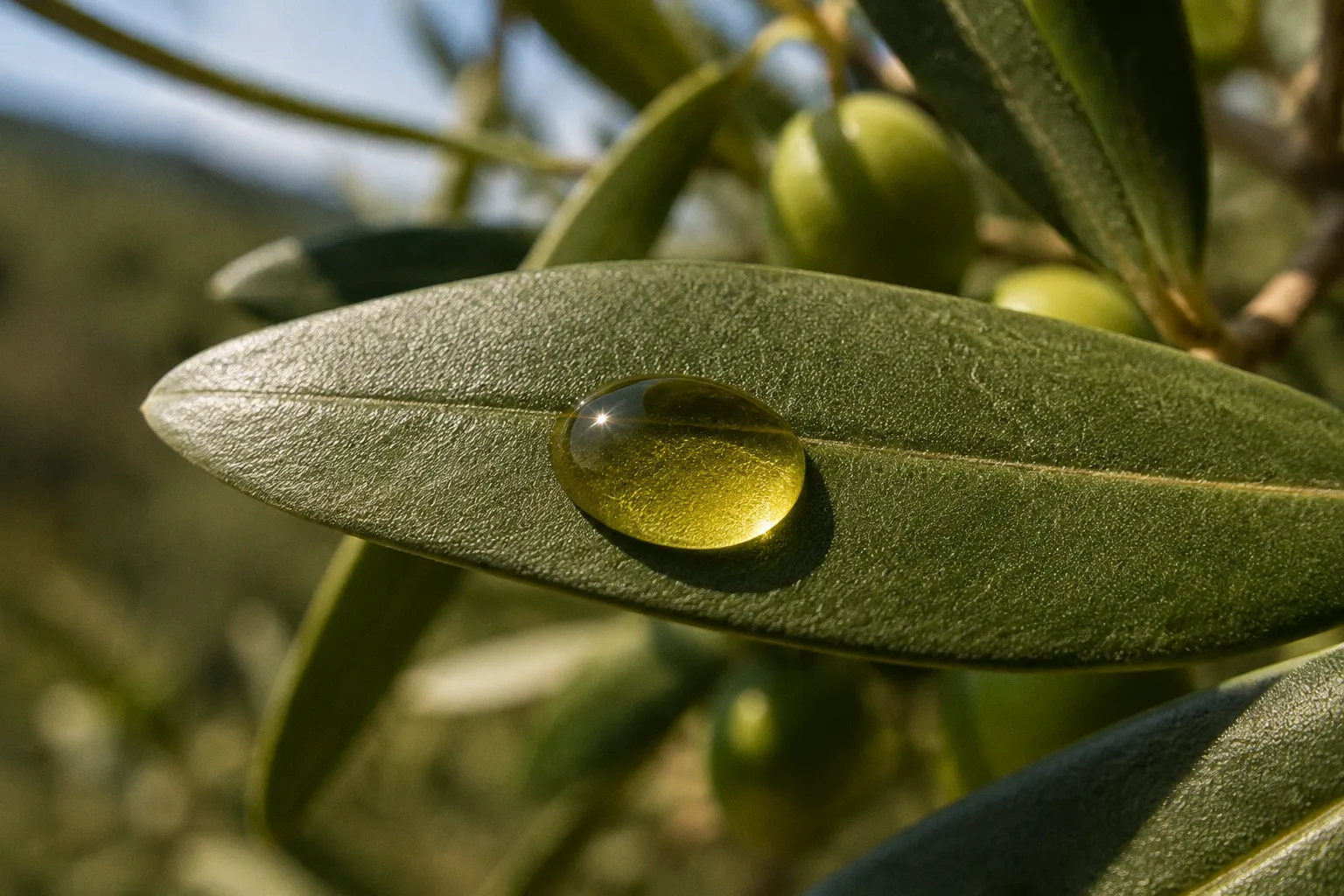
They describe it differently: "My moisturiser doesn't seem to work anymore," or "I wake up and my cheeks feel parched even though I haven't changed a thing." What they are sensing, more often than not, is the quiet decline of a lipid their body has been producing since birth — squalene — and the skin's growing need for a replenishing stand-in. That stand-in, increasingly at the centre of clean skincare formulation, is plant-derived squalane: a biomimetic emollient that mirrors what our own sebaceous glands once made in abundance, sourced today from sugarcane, olives, amaranth, and rice bran rather than the shark livers that once supplied the industry.
Understanding what squalane actually is — and why the single-letter difference between squalene and squalane matters more than most product labels let on — can transform the way you think about hydration, barrier repair, and ingredient transparency. Let me walk you through it the way I would with a client in the treatment room: slowly, with texture under our fingers.
The Chemistry of Biomimicry: Squalene vs. Squalane
The words look nearly identical on an ingredient list, but they describe two fundamentally different substances in terms of stability and usability.
Squalene (molecular formula C₃₀H₅₀) is an unsaturated polyunsaturated lipid. Your sebaceous glands produce it continuously, and it comprises roughly 12% to 15% of human sebum — the thin, slightly waxy film that coats your skin's surface and keeps it supple. In its native state inside your skin, squalene does exactly what it should: it integrates seamlessly into the lipid matrix, supports barrier integrity, and contributes to that pliable, soft-to-the-touch quality we associate with healthy skin.
The problem begins the moment squalene meets the outside world. Those double bonds in its molecular structure — the very features that make it biologically active — are highly reactive. Expose pure squalene to air and UV light, and it oxidises rapidly. This is why you will not find straight squalene in a bottle of facial oil sitting on your bathroom shelf: it would degrade within days, turning rancid and losing every benefit it was meant to deliver.
Squalane (C₃₀H₆₂) is what happens when formulators solve that problem through hydrogenation. By saturating every double bond in the squalene molecule, chemists produce a fully saturated lipid — one that resists oxidation, maintains its integrity at room temperature, and lasts months on a shelf without degrading. It is the same carbon backbone, the same skin-compatible shape, but locked into a stable, long-lived form.
Squalane is your skin's own squalene, made shelf-stable — the same lipid architecture, re-engineered so it can actually reach you in a bottle.
This is the core of what makes plant squalane biomimetic. It does not merely moisturise from the surface; its molecular structure is close enough to your own sebaceous lipids that it integrates into the skin barrier with a compatibility few synthetic emollients can match. When I apply it during a facial, it sinks in with almost no resistance — no heavy film, no greasy aftermath — because the skin recognises it.
Why Your Skin Needs This Lipid Back
Here is the piece that often surprises clients: your body is already producing less squalene than it was a few years ago, and the decline accelerates quietly through your thirties and beyond.
Human skin squalene production begins to decrease noticeably after age 25 to 30. The practical result is a gradual thinning of that protective sebaceous film — the same one that kept your complexion bouncy and resilient through your teens and early twenties. Transepidermal water loss increases. The skin's ability to hold onto its own natural moisture weakens. Fine dehydration lines appear not because the skin is ageing aggressively, but because its lipid reserves are genuinely running lower.
I see this every week in the treatment room. A thirty-two-year-old comes in convinced she has developed "dry skin" overnight, when what has actually shifted is her internal squalene output. Her barrier is still functioning — it is simply under-supplied. The fix, in many cases, is not a richer cream packed with occlusives but a replenishing lipid that her body already knows how to use. Topical squalane fills that gap directly.
This is also why squalane-based products feel so different from heavier plant butters like shea or cocoa. Those butters sit closer to the surface, creating a protective seal. Squalane, by contrast, moves deeper into the intercellular lipid layers, replenishing what the skin has lost rather than merely covering for it. The two approaches work beautifully together — a squalane serum beneath a light shea butter seal, for instance — but they address different layers of the same problem.
From Sharks to Sugarcane: How Sourcing Evolved
The history of cosmetic squalane is one of those stories the clean beauty world does not tell often enough, probably because the early chapters are uncomfortable.
Before sustainable plant-based sourcing became viable, virtually all commercial squalane came from shark liver oil. Industry estimates suggest that roughly 3,000 sharks were required to yield a single tonne of squalane. For decades, deep-sea shark populations were quietly decimated to supply the cosmetics and pharmaceutical industries with this prized lipid — a fact that only began shifting when botanical and bio-fermentation methods matured.
The transition did not happen overnight. Researchers identified squalene in plant sources as early as the 1930s, but it took until recent years for plant-derived squalane to become commercially dominant. By the mid-2010s, data indicated that plant sources were supplying approximately 40% of cosmetic squalane globally — and that share has continued to grow.
Today, the major plant sources each bring their own character to the final ingredient:
| Source | Squalene Content in Raw Oil | Notable Qualities |
|---|---|---|
| Olive oil | ~0.7% to 0.8% | Long-established extraction; widely available; heavier molecular profile |
| Bio-fermented sugarcane | High purity through fermentation | Lightweight; increasingly dominant in commercial supply chains |
| Rice bran | Moderate | Often co-extracted with other antioxidant-rich lipids |
| Amaranth | Moderate to high | Niche source; rich in accompanying phytosterols |
| Wheat germ | Moderate | Less common; valued for its vitamin E co-content |
When you pick up a product labelled "plant-derived squalane," it is worth knowing which plant is behind it — not because one source is categorically superior, but because the accompanying compounds (phytosterols, tocopherols, trace fatty acids) vary by origin, and these co-extracted elements influence how the oil feels on your skin. An olive-derived squalane may carry a slightly richer tactile profile than a sugarcane-fermented one, which tends to be exceptionally light and nearly odourless. Neither is wrong; they simply suit different skin situations and different places in a routine.
The quiet victory of plant squalane is that the beauty industry found a way to replenish a skin-identical lipid without emptying the ocean to do it.
The Non-Comedogenic Advantage
One of the most persistent anxieties I hear from clients with oily or breakout-prone skin is the fear that any oil — any lipid at all — will congest their pores. It is an understandable worry, especially for people who have spent years being told to strip their skin clean and avoid anything "heavy."
Squalane deserves a careful, specific place in this conversation because its comedogenic rating is zero. On the standard comedogenic scale — where 0 means a substance will not clog pores and 5 means it almost certainly will — squalane sits at the very bottom. It is lightweight, absorbs quickly, and does not accumulate in follicular openings the way richer plant oils (coconut oil, for instance, which rates around 4) can.
This makes it one of the few genuinely barrier-supportive lipids that I feel confident recommending to clients managing:
1. Oily and combination skin that still experiences dehydration beneath the surface oiliness — a surprisingly common pairing where the skin overproduces sebum as compensation for lipid loss.
2. Acne-prone complexions that need moisture replenishment without pore congestion — squalane hydrates without feeding the cycle of occlusion and inflammation.
3. Sensitive and reactive skin that flares with botanical oils containing high levels of oleic or linoleic acid — squalane's saturated structure is inert enough to rarely provoke sensitivity.
4. Post-procedure skin recovering from chemical peels, microneedling, or laser treatments, where barrier support is critical but heavy occlusion can impede healing.
The reason squalane performs so well across these diverse situations comes back to its biomimetic structure. Because it closely resembles the lipids your own sebaceous glands produce, your skin metabolises it without the friction that foreign-seeming oils sometimes create. It does not "sit on top" demanding to be noticed; it integrates.
Formulation Stability: Why Hydrogenation Is the Point
I want to linger here for a moment, because this is where ingredient literacy becomes genuinely practical.
When a formulator chooses squalane for a product — whether it is a standalone facial oil, a serum base, or a component in a richer cream — they are choosing stability. The hydrogenation process that converts squalene into squalane does more than prevent rancidity; it determines the ingredient's entire usable life.
A bottle of pure squalane, stored at room temperature away from direct sunlight, maintains its integrity for an extended period without the need for aggressive preservation. This is a meaningful advantage in clean formulation, where brands are often working with limited preservative systems and trying to avoid synthetic antioxidants. Squalane's inherent resistance to oxidation gives the formulator breathing room.
Contrast this with squalene in its unsaturated state: introduce it to a formula, and you immediately face a cascade of stability challenges. The double bonds react with oxygen, the oil darkens, off-notes develop, and the lipid's skin benefits degrade before the product even reaches the consumer. This is precisely why you will not encounter pure cosmetic-grade squalene (with an "e") as a primary oil in shelf-stable skincare — it simply cannot hold its own outside a carefully controlled environment.
Hydrogenation is not industrial tampering — it is the step that allows a skin-identical lipid to survive long enough to reach your bathroom shelf.
The practical takeaway for anyone building a clean skincare routine: when you see "squalane" on an ingredient list, you are looking at a lipid that has been specifically engineered for stability without sacrificing its fundamental skin compatibility. It is one of the rare cases in cosmetic chemistry where processing an ingredient makes it not weaker but genuinely more useful.
Working Squalane Into Your Ritual
If there is one thing I have learned from years of guiding clients through ingredient transitions, it is that understanding a substance intellectually and integrating it into a daily routine are two different experiences. So let me offer squalane the way I would place it in your hands during a consultation: with context and intention.
Layering position matters. Squalane works best applied to clean, slightly damp skin — after a hydrating toner or mist, before a heavier cream or butter seal. Its lightweight texture means it absorbs readily at this stage, replenishing the intercellular lipid matrix without blocking the humectants beneath it.
A little goes further than you expect. Three to four drops warmed between the palms and pressed gently across the face and neck are typically sufficient. Because squalane spreads so easily — its low surface tension is part of what makes it biomimetic — over-applying simply results in product sitting on the surface rather than integrating.
Morning or evening, both work. Unlike some botanical oils that are photosensitive or best reserved for nighttime use, squalane's saturated structure makes it stable under daytime conditions. Apply it in the morning beneath sunscreen for a smooth, non-greasy base, or use it as the final replenishing step in an evening routine after actives have had time to absorb.
Combine intentionally with other botanical oils. If you already enjoy richer oils — rosehip, marula, sea buckthorn — squalane can serve as a lightweight carrier, diluting heavier oils slightly and improving their spreadability without diluting their benefits. I often blend two drops of squalane with one drop of a more complex botanical oil for clients who want both depth and lightness.
The ritual of applying it matters as much as the ingredient itself. Warming it between the palms, pressing it into the skin rather than dragging, taking those few extra seconds to breathe and settle into the sensation — these are the moments where skincare stops being maintenance and becomes something closer to self-restoration.
A Grounding Note
What draws me back to squalane again and again, both in my own practice and in conversations with clients, is its quiet honesty as an ingredient. It does not promise transformation. It does not arrive with aggressive claims or before-and-after timelines. It simply replaces something your body once made in abundance, in a form your skin already understands — and it does so without depleting marine ecosystems to get there.
If your skin has begun to feel subtly different in recent years — less cushioned, a touch more reactive, quicker to lose moisture — consider that your sebaceous squalene output may be part of the story. Plant squalane will not reverse time, but it will meet your skin where it is, in a language it was born speaking. Start with a few drops, pressed gently into damp skin, and pay attention to how your barrier responds over the coming weeks. The shift is often quieter than you would expect — a softening, a steadiness, a return to something your skin remembers.