Aromatherapy shower steamers: how they turn water into steam
The first thing most people notice with a shower steamer is not the tablet itself, but the change in the air: a cool eucalyptus lift, a soft citrus brightness, or a mentholated breath that makes the shower feel more spacious.
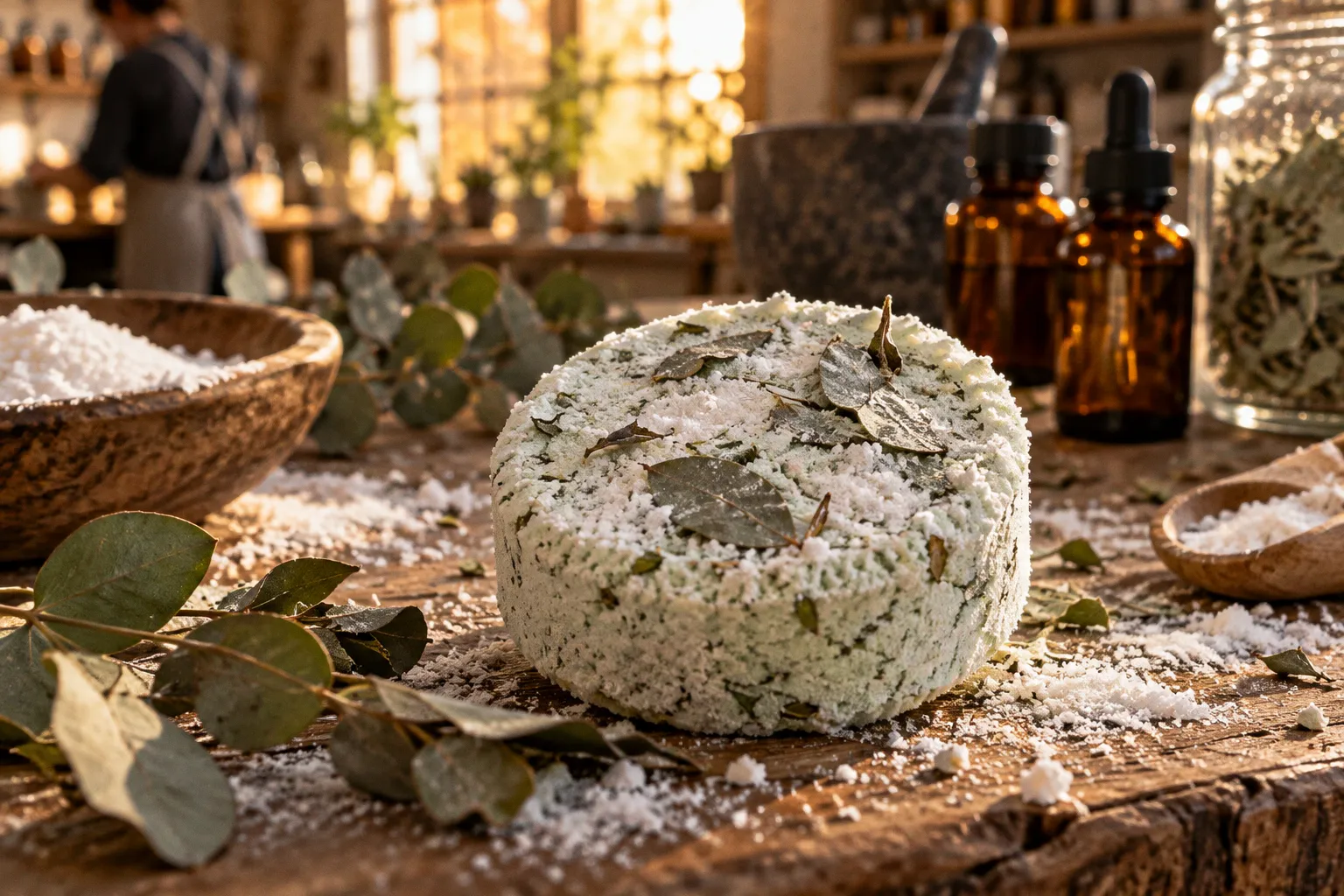
Yet the tablet does not create the steam. Your shower does that. The steamer works within the warm, humid atmosphere, using a small acid-base reaction to release aromatic vapors into the moving air.
Understanding how aromatherapy shower steamers work makes the ritual more effective and much gentler on the skin. These tablets are not bath bombs in disguise, and they are not solid perfume meant to be rubbed across the body. They are carefully concentrated scent-release products designed for the shower environment, where water, heat, and airflow meet.
The chemistry of effervescence: how water triggers the reaction
A shower steamer usually contains three functional elements:
- Sodium bicarbonate, commonly known as baking soda
- Citric acid
- Concentrated essential oils, sometimes combined with menthol crystals or menthol powder
When the tablet is dry, these ingredients remain relatively quiet. Once light splashes of water reach the surface, the baking soda and citric acid dissolve and react. This is an acid-base reaction that releases carbon dioxide gas. The small bubbles help break the tablet apart, while the warmth and humidity of the shower encourage the aromatic ingredients to disperse into the surrounding air.
This is the same familiar fizzing principle used in bath bombs, but the intended destination is different. A bath bomb releases its ingredients into a tub of water, where skin comes into prolonged contact with the dissolved formula. A shower steamer releases fragrance into the steam-filled air for inhalation. The tablet itself is not boiling water, changing the temperature of the shower, or generating the steam that rises around you. That steam comes from the shower water. The steamer simply adds a fragrant, effervescent layer to it.
A typical manufacturing ratio is approximately two parts baking soda to one part citric acid. This balance allows the tablet to fizz when activated without making it so reactive that humidity causes it to crumble prematurely during storage. The exact formula varies between makers, especially when clay, binders, botanical powders, menthol, or different essential oils are included, but the 2:1 relationship is a useful way to understand the foundation of the product.
A shower steamer does not make the steam; it teaches the warm, humid air how to carry scent.
Why the tablet needs only a little water
Direct water creates a fast, dramatic reaction. That can be satisfying for a bath bomb, but it is not ideal in a shower, where the purpose is usually to create a steady aromatic atmosphere over several minutes.
A light splash allows the outer layer of the steamer to dissolve gradually. Carbon dioxide bubbles loosen the tablet bit by bit, and essential oils evaporate into the warm air at a more measured pace. If the steamer sits directly beneath the shower stream, much of the tablet can disappear quickly into the drain before the fragrance has time to unfold.
This is why placement matters as much as the formula. A steamer should be dampened, not drowned.
What are shower steamers, exactly?
Shower steamers are water-activated aromatic tablets made for use on the floor or ledge of a shower. They are sometimes called essential oil shower tablets or aromatherapy shower tablets, although not every product contains only essential oils. Some include menthol crystals, fragrance blends, botanical powders, or other aromatic materials.
The word “aromatherapy” is often used broadly in this category, so I encourage a little discernment. A steamer may create a beautiful sensory experience, but it should not be presented as a cure for sinus infections, respiratory illness, or any other medical condition. The cooling sensation of menthol can feel open and refreshing, while eucalyptus may bring a clear, camphoraceous quality to the air. That sensory effect is real, but it is not the same as treating an illness.
The experience depends on several moving parts:
- The tablet’s composition: More aromatic material generally creates a stronger scent, but strength is not the same as quality.
- The water temperature: Warm water creates the humid environment that carries the aroma.
- The shower’s ventilation: Strong airflow can disperse fragrance quickly.
- The tablet’s location: Direct spray accelerates dissolution, while light splashes extend it.
- The size and density of the tablet: A compact tablet may release more slowly than a loosely pressed one.
- The aromatic materials used: Eucalyptus, menthol, lavender, peppermint, citrus oils, and resinous botanicals each behave differently in the air.
A standard retail steamer may weigh around 50 grams, though handmade products vary considerably. The weight alone does not tell you how long it will last or how strong it will feel. A dense tablet with a restrained essential oil blend may create a quieter ritual than a softer tablet heavily scented with menthol.
Shower steamer versus bath bomb: similar fizz, different purpose
The confusion between a shower steamer and a bath bomb is understandable. Both often contain baking soda and citric acid. Both fizz when water activates them. Both may be molded into smooth, colorful shapes. But the similarity largely ends there.
A bath bomb is designed to dissolve in a bath, where its formula may include skin-conditioning oils, butters, salts, clays, or other ingredients intended for contact with the body. A shower steamer is designed to dissolve away from the skin. Its aromatic concentration can be higher, and it generally does not include the same carrier oils used to moisturize and soften bathwater.
| Feature | Shower steamer | Bath bomb |
|---|---|---|
| Main setting | Shower floor or ledge | Bathtub water |
| Intended effect | Aromatic vapor and sensory atmosphere | Fragrance, color, and bathwater treatment |
| Water exposure | Light splashes | Full immersion |
| Essential oil profile | Often more concentrated | Usually diluted within the bath formula |
| Skin contact | Should be avoided | Designed for diluted contact with bathwater |
| Best placement | Away from the direct stream | Dropped into the tub |
| Typical dissolution | Gradual, often several minutes | Rapid release through the bathwater |
A shower steamer should not be used as a bath bomb. Placing one in a tub changes the exposure completely. The concentrated, un-emulsified essential oils may come into direct contact with the skin and bathwater in a way the product was not designed to support. Nor should the tablet be rubbed over the body, placed under the arms, or pressed against the face.
This distinction is especially important with handmade products, where the scent profile can be generous and the ingredients highly concentrated. The most restorative ritual is not always the strongest one. Skin tends to respond well to a clear boundary: shower steamers belong in the air, while body oils, soaps, and bath treatments belong on or in the water according to their formulation.
The role of menthol and eucalyptus in vapor diffusion
Menthol and eucalyptus are among the most recognizable ingredients in shower steamers because they create a distinct cooling and clearing sensation. Menthol crystals can produce a cool impression in the nose and throat, while eucalyptus essential oil contributes a sharp, green, camphoraceous aroma that travels readily through warm, humid air.
Eucalyptus essential oil is commonly associated with a high cineole content. Depending on the botanical source and the specific oil, the composition can vary, but some eucalyptus oils contain a substantial proportion of 1,8-cineole, sometimes described as ranging from approximately 70% to 90%. This aromatic constituent helps explain the oil’s penetrating character and recognizable respiratory-style scent.
Still, aromatic intensity needs a soft hand. Menthol is powerful, and handmade formulas should use it conservatively. A commonly cited maximum in shower steamer formulations is 3% menthol crystal powder. More is not automatically more therapeutic; it may simply become harsh, overwhelming, or irritating in a small, enclosed bathroom.
When I guide someone toward a mentholated shower ritual, I suggest paying attention to the quality of the sensation rather than chasing maximum strength. A comfortable cooling veil can feel grounding. A sharp, burning rush that makes the eyes water is a sign to step away, improve ventilation, or choose a gentler formulation.
Why eucalyptus and menthol feel different from lavender or citrus
Not all essential oil shower tablets behave or feel alike.
- Eucalyptus tends to smell green, penetrating, and medicinal in character, with a vaporous quality that suits a morning or post-workout shower.
- Menthol creates a cooling sensation that can feel immediate and bright.
- Lavender is softer and more rounded, often better suited to an evening routine.
- Citrus oils bring a sparkling, uplifting quality, though their brightness can feel more fleeting.
- Rosemary, pine, or fir may create a forest-like atmosphere with a dry, resinous edge.
- Peppermint can feel crisp and cooling, but may be intense for sensitive users.
The shower’s heat does not magically transform these materials into medicine. It helps them move through the air, while the tablet’s fizzing action opens the compressed structure and exposes fresh surfaces to moisture.
How to use shower steamers effectively
The most reliable method is simple, but the small details shape the entire experience.
1. Begin with a dry shower floor or ledge
Place the tablet where it can receive occasional splashes rather than a constant stream. A corner of the shower floor often works well, provided it is not under the showerhead. A built-in ledge can be even better if it stays damp without becoming submerged.
Avoid placing the steamer where you will stand directly on it. Aside from shortening its life, this can spread concentrated aromatic material across the floor and create an unnecessary slipping or irritation risk.
2. Start the shower and let the room warm
Allow the water to run until the air becomes comfortably humid. The goal is not extreme heat. An overly hot shower can leave the skin tight and flushed, particularly when the barrier is already dry or reactive.
Warm, comfortable water creates enough humidity for scent to travel. You do not need a cloud of heavy steam for the steamer to work.
3. Wet only one edge of the tablet
Move the steamer into a position where a few splashes can reach it. If the surface remains completely dry, the reaction will not begin. If the whole tablet is placed under running water, it may dissolve rapidly and send most of the aromatic material down the drain.
A gradual activation usually creates a more even scent release. The tablet may begin with a quiet fizz, then soften around the edges as the reaction moves inward.
4. Let the scent build before adding more water
Give the tablet a moment to develop. During a typical shower, a steamer kept away from the direct stream may dissolve over roughly five to ten minutes, though the duration depends on its density, size, humidity, and formulation.
If the fragrance feels faint, a small repositioning may be more useful than adding a large amount of water. Move it slightly closer to a splash zone rather than directly beneath the stream.
5. Breathe normally and leave if the aroma feels harsh
There is no need to force deep inhalations. Let the aromatic air surround you naturally. If the scent causes coughing, burning, eye watering, dizziness, or discomfort, rinse the area, improve ventilation, and step out of the shower.
The point of a restorative ritual is that your body can soften into it. A product that demands endurance is not offering restoration.
6. Rinse the area after use
Once the tablet has dissolved, rinse away any remaining residue from the shower floor. This keeps the surface clean and reduces the chance of a slippery film, particularly if the formula contains clays, botanicals, or other binding ingredients.
Placement is the quiet art of a longer ritual
The best location is usually not the most obvious one. Directly beneath the showerhead may seem logical because the tablet needs water, but that position gives the reaction too much force. The steamer may fizz vigorously and disappear before the aromatic atmosphere has fully settled into the room.
Instead, look for the place where the tablet can receive:
- A few light splashes
- Warm air from the shower
- Enough open space for fragrance to disperse
- No direct contact with your feet
- No pooling water
A ledge often gives the most control. You can move the tablet closer to the water if the scent is too quiet, or farther away if it is releasing too quickly. On the floor, a corner away from the drain can work well, although the tablet should never sit in standing water.
Ventilation also changes the experience. A completely closed bathroom may hold fragrance intensely, while an open door or running exhaust fan can make the aroma more subtle. If you are sensitive to essential oils, a little airflow is usually preferable to creating a dense, concentrated cloud.
The most effective shower steamer is not the one that fizzes fastest; it is the one that gives the scent time to unfold.
Safety protocols: why direct skin contact should be avoided
Shower steamers are formulated for aromatic diffusion, not for body cleansing or moisturization. Their essential oils may be concentrated and un-emulsified, which means they are not evenly dispersed through water in the way a properly formulated bath product should be.
For that reason, do not:
- Rub a steamer directly onto the skin
- Use it as soap or body scrub
- Place it in bathwater
- Apply the softened tablet to the face
- Hold it beneath the nose or against the chest
- Leave children or pets with access to the product
- Use a heavily mentholated tablet in a poorly ventilated room
People with fragrance sensitivity, asthma, reactive skin, migraines, or respiratory concerns may find strong aromatic products uncomfortable. Pregnancy, young children, and pets also warrant extra caution because essential oils are not universally appropriate in every environment. Product-specific guidance matters, and a gentler or unscented shower ritual may be the better choice.
Storage is part of safety as well. Keep steamers sealed and dry, away from bathroom humidity until use. A tablet that absorbs moisture in storage may soften early, lose its intended fizz, or release fragrance into the packaging. Handmade products benefit from being treated like fresh botanical preparations: protected from heat, water, and unnecessary exposure to air.
The restorative logic behind the ritual
A shower steamer works through a small sequence of physical events: water activates the baking soda and citric acid, carbon dioxide bubbles break down the tablet, and warm humid air carries the aromatic ingredients through the shower. The experience feels more elaborate than the chemistry because scent changes the pace of the room. It gives an ordinary wash a beginning, a middle, and a gentle close.
That does not mean every steamer is right for every person or every shower. The strongest aroma may be less comforting than a quiet botanical blend. A slow-dissolving tablet may feel more luxurious than one that erupts and vanishes. Placement, ventilation, and personal sensitivity are as important as the ingredient list.
When choosing between a eucalyptus steamer for a bright morning rinse and a lavender tablet for an evening shower, I return to the same principle I use in skin rituals: let the product support the body rather than asking the body to tolerate the product. Use the tablet away from direct water, allow the scent to build gradually, and keep it separate from anything intended for direct skin contact.
The shower already provides the steam. The steamer’s role is more delicate: to meet that warmth with fizz, fragrance, and a little breathing space.