Over-Exfoliated Body Skin: Warning Signs and Fast Fixes
You stepped out of the shower, reached for the body lotion you've been using for months, and felt that sting. The product may not have changed. Your skin may simply be less able to tolerate it today.
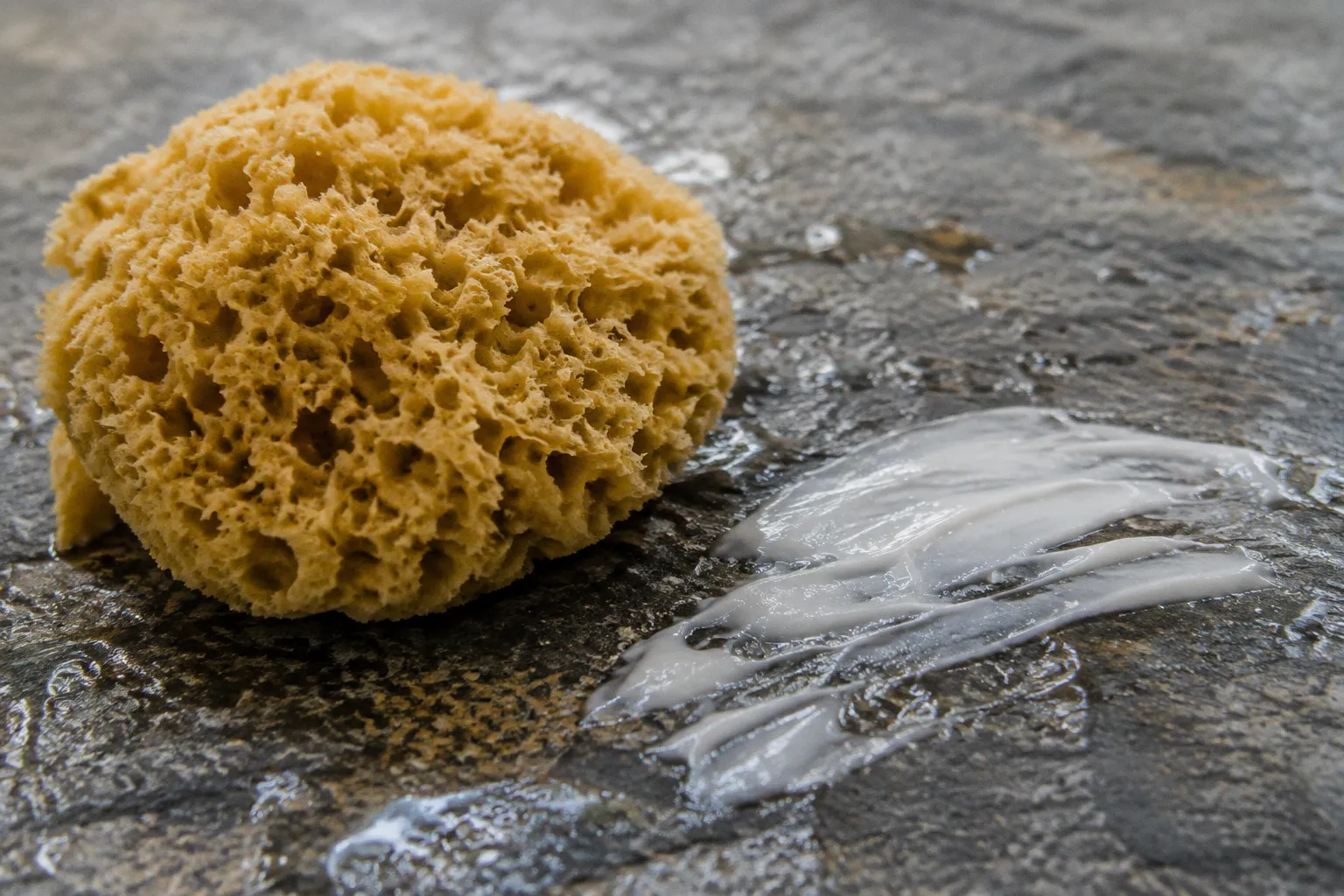
If your arms, legs, chest, or shoulders feel tight and papery, burn under familiar products, or stay visibly red after washing, you've probably moved past useful exfoliation and into irritation.
The mistake is almost always the same: more pressure, more products, more often. Skin doesn't reward enthusiasm with better results. It rewards consistency and restraint. Here's how to recognise over-exfoliated body skin, stop the cycle before it deepens, and build a practical routine for over exfoliated body skin repair.
The Anatomy of Over-Exfoliation: Why Your Barrier Fails
Body skin isn't a countertop. Its outermost layer, the stratum corneum, is made up largely of flattened skin cells surrounded by lipids, including ceramides, cholesterol, and fatty acids. The familiar comparison is a brick wall: the cells are the bricks, and the lipids act like mortar between them. That structure helps reduce water loss and limits the amount of irritation that reaches the living layers below.
Exfoliation changes that outer layer. A handmade sugar scrub lifts and removes surface cells through friction. Glycolic, lactic, and mandelic acids loosen the bonds between cells. Salicylic acid works differently, moving into oil-rich areas and helping clear material around follicles. None of these methods is automatically a problem. The trouble starts when the skin cannot restore what is being removed or disturbed before the next treatment arrives.
That can happen because of frequency, pressure, a rough tool, a high-strength formula, or a combination of several active products. A scrub followed by an acid lotion is not necessarily twice as effective. On already irritated skin, it may simply be twice the workload.
When the protective structure is disrupted, water can leave the skin more readily. This process is commonly described as transepidermal water loss, or TEWL. The practical result is familiar: tightness after washing, increased sensitivity, rough patches, and moisturiser that suddenly feels sharp rather than comforting.
Exfoliation rewards consistency. It punishes enthusiasm.
The barbershop parallel is worth keeping. You don't shave a client's face again ten minutes after the last pass just to chase a closer finish. You prepare the skin, work with the grain, and leave the surface calm. Body exfoliation follows the same rule. The grit is not the point; the condition of the skin afterward is.
Identifying the Warning Signs of a Compromised Lipid Matrix
Over-exfoliated skin does not always look dramatic at first. It often begins with a small change in how a familiar product feels. Then the surface becomes more reactive, rougher, or less comfortable between showers.
Look for a pattern rather than relying on one isolated symptom:
1. Stinging or burning under a previously tolerated moisturiser. If the same body butter or lotion that felt neutral last week now makes the skin flinch, your skin's tolerance may have changed. That does not prove exfoliation is the cause, but it is a reason to pause active products and simplify the routine.
2. Redness that persists after the shower. A temporary flush from hot water, friction, or exercise can be ordinary. Redness that remains, returns easily, or spreads across the treated area deserves more attention.
3. A tight, papery, or squeaky-clean feeling. Clean is not supposed to mean stripped. If the skin feels taut immediately after towel-drying, the routine may be removing more surface protection than it can comfortably replace.
4. Flaking or peeling. Dry elbows and shins are common, but visible peeling after a scrub or acid treatment suggests that the area needs less stimulation, not another polishing step.
5. New roughness or breakouts. Small bumps, clogged-looking follicles, or a rash-like texture can appear after irritation. They should not automatically be explained as the skin adjusting or going through a predictable “purge.” Reassess what has been applied, stop the suspected irritants, and seek professional advice if the change persists or worsens.
6. A tight or waxy-looking shine. Shine alone is not a diagnosis. Body skin can look glossy because of lotion, oil, sweat, lighting, or the natural surface of the skin. However, a new tight-looking or waxy sheen alongside burning, redness, flaking, or unusual sensitivity can fit a compromised-barrier pattern. Treat the accompanying symptoms as the useful information, not the shine by itself.
7. Increased sensitivity to fragrance, heat, or plain water. When a body wash that was comfortable for months suddenly stings, the wash may not be the only suspect. The skin could be less able to tolerate ingredients and temperature changes because its protective function has been disrupted.
One sign can be a yellow flag. Several appearing together are a reason to stop exfoliating the affected area. Do not cover the warning signs with another “soothing” active and continue the same schedule underneath it.
If the area is intensely painful, swollen, blistered, oozing, rapidly spreading, or developing a persistent rash, this is no longer a routine question about body scrub over exfoliation signs. Stop the products and speak with a clinician. The same applies to symptoms that do not improve after simplifying your routine.
The Immediate Pause: Stopping the Cycle of Barrier Damage
The first move is the opposite of what many people reach for. You do not need a richer scrub, a stronger acid, or a “reset” polish. You need a clean pause.
Stop physical scrubs and acid-based products on the affected area until the skin is comfortable again and no longer showing active irritation. That includes:
- Sugar scrubs, salt scrubs, coffee grounds, rice bran, and apricot-shell polishes, including products marketed as fine or gentle.
- AHA body lotions, such as formulas containing glycolic, lactic, or mandelic acid.
- BHA sprays, washes, and pads, including salicylic acid products used on the body.
- PHA exfoliants, such as gluconolactone or lactobionic acid. They may be milder, but they are still exfoliating actives.
- Retinoids, including body retinol and other retinoid products used on the irritated area.
- Dry brushing with stiff bristles.
- Loofahs, exfoliating gloves, and pumice stones on the affected skin.
- Fragranced or highly foaming body cleansers if they sting or leave the area tight.
You do not have to throw everything away. Move the products out of the recovery routine and reassess them later, one at a time. The goal is to remove variables while the skin settles.
What to do instead:
- Use a fragrance-free, low-foam body wash. A simple cleanser is enough. You do not need a product that leaves the skin feeling polished or squeaky.
- Keep the water lukewarm. Hot water can worsen dryness and flushing. Shorter showers are usually easier on irritated skin than long, steamy ones.
- Wash with your hands or a very soft cloth. Do not use the recovery period to test a new brush or massage technique.
- Pat dry with a soft towel. Rubbing adds another form of friction.
- Apply moisturiser while the skin is still slightly damp. You do not need to wait for the body to air-dry. A moisturiser helps reduce the amount of water lost from the surface after bathing.
- Choose a plain formula you already know you tolerate, if possible. A recovery routine is a poor time to introduce several unfamiliar botanical extracts, essential oils, or strong fragrance blends.
When the skin starts objecting to ordinary products, fewer steps are usually more useful than a more ambitious formula.
A simple pause may look like this:
| Product or habit | What changes during recovery | Why |
|---|---|---|
| Physical scrub | Stop on the irritated area | Friction can keep the surface inflamed |
| AHA, BHA, or PHA | Stop temporarily | Acids can add irritation while the barrier is vulnerable |
| Retinoid | Stop on the affected area | Turnover-accelerating products may be poorly tolerated during irritation |
| Body wash | Use a mild, fragrance-free option | Reduces the number of potential irritants |
| Shower | Keep it lukewarm and brief | Heat and prolonged washing can worsen tightness |
| Towel-drying | Pat rather than rub | Limits additional mechanical friction |
| Moisturiser | Apply after bathing and as needed | Supports comfort and reduces water loss |
The pause is not a punishment for using exfoliation. It is part of using it responsibly. Skin cannot settle if the same source of friction or chemical stimulation is being applied every few days.
Rebuilding the Stratum Corneum: A 4-Week Recovery Protocol
Once the irritating steps are gone, recovery becomes deliberately unexciting. That is a feature, not a failure. The aim is to restore comfort and reduce water loss, not to make the skin feel aggressively smooth overnight.
There is a difference between feeling better and being ready for active exfoliation again. Stinging may improve within several days when the trigger is removed, while dryness, rough texture, and sensitivity can take longer. The timeline varies with the depth of irritation, the area involved, the climate, and the products used. Use the condition of the skin as the guide rather than treating four weeks as a guaranteed deadline.
Week 1: Damage Control
During the first week, treat the skin like a surface that has been overworked. Calm it before asking it to do anything else.
- Apply a bland, barrier-supporting moisturiser at least twice daily, especially after bathing. Ceramides can be useful because they are among the lipids naturally found in the outer barrier, but the most important test is whether the product feels comfortable and does not keep provoking the area.
- Use an occlusive layer at night if the skin remains very dry. Petrolatum, dimethicone, or a plain balm can help slow water loss. An occlusive does not hydrate by itself; it helps hold on to the water already present after washing and moisturising.
- Keep the ingredient list uncomplicated. Avoid introducing vitamin C, strong niacinamide formulas, retinoids, acids, essential oils, or heavily fragranced products while the skin is burning or actively peeling.
- Do not exfoliate, even if the surface feels rough. Roughness during recovery is not proof that more dead skin needs to be removed. It can be part of the irritation itself.
If a moisturiser stings repeatedly, rinse it off and switch to a simpler product. “Barrier-supporting” is not a free pass for every ingredient in a formula. A product can be excellent in general and still be wrong for freshly irritated skin.
Weeks 2–3: Lipid Replenishment
If the skin is calmer, continue doing less. The absence of dramatic symptoms does not mean the area is ready for a full return to the old routine.
- Continue moisturising consistently. Apply after bathing and whenever the skin becomes uncomfortable or visibly dry.
- Consider a light body oil only if it improves comfort. Squalane, jojoba, or another simple oil may reduce the feeling of tightness for some people. Oil is optional and should not replace a moisturiser if the skin needs more than surface slip.
- Use a humectant cautiously. Glycerin or hyaluronic acid can work well in a moisturising formula, but layering a new serum onto reactive skin is not automatically an upgrade. If the product stings, stop it.
- Watch for changes that do not fit simple dryness. New breakouts, clusters of bumps, worsening redness, or an itchy rash should be reassessed rather than labelled as a normal “rebalancing” stage. Review recent products, stop anything suspicious, and get medical advice if the problem continues.
A new breakout after exfoliation can have several explanations: irritation, follicular occlusion, contact dermatitis, sweat, friction, or an unrelated skin condition. There is no reliable rule that week two brings a normal wave of blemishes. If the skin changes, investigate the change instead of waiting for it to pass on schedule.
Week 4: Stability Check
By the fourth week, some people are ready to test a cautious return to exfoliation. Others are not. The calendar is only a checkpoint.
The skin should be:
- Comfortable under a familiar, fragrance-free moisturiser.
- Free from persistent burning and significant tenderness.
- No longer showing ongoing redness or active peeling.
- Less tight after washing.
- Smooth enough that you are not tempted to scrub simply to remove roughness.
- Stable for several days without a new flare.
A little dryness does not necessarily mean the barrier is still severely compromised, but active stinging, spreading redness, or recurring flaking means the pause should continue. If symptoms remain despite a simplified routine, or if the area keeps breaking out or developing a rash, a dermatologist can help distinguish over-exfoliation from eczema, folliculitis, allergy, or another cause.
Strategic Reintroduction: How to Safely Resume Exfoliation
Returning to exfoliation is not the same as picking up the old schedule where you left it. The previous routine produced the problem, so it is not the baseline to restore.
Start with one session per week on a small area. Keep that frequency for several weeks before deciding whether the skin needs more. Many body-care routines become excessive because the first result is mistaken for a new requirement: the skin feels smooth, so the user repeats the process as soon as that feeling fades. The aim is not to preserve a freshly scrubbed sensation every day.
Choose one method:
- A physical scrub with small, smooth particles and light pressure.
- One chemical exfoliant at a modest strength.
- A product designed for occasional use rather than several overlapping active formulas.
Do not combine a physical scrub and an acid product in the same routine during reintroduction. It is also sensible to leave a gap between different exfoliating sessions while you are learning how the skin responds. If the old routine involved a strong acid, return at a lower strength or use it less often rather than trying to compensate with a scrub.
Test the routine in a controlled way
Apply the product to one forearm, one calf, or another small area. Do not begin with the entire body. Observe the skin through the next day or two for burning, increasing redness, tightness, itching, flaking, or new bumps.
A product that feels fine for a few minutes can still be too much once the skin has had time to react. If the test area remains comfortable, you can expand gradually. If it stings, stop. Do not scrub harder to remove the product, and do not apply another active to “balance” the reaction.
Keep the rest of the routine stable while testing. Use the same cleanser, similar shower temperature, and familiar moisturiser. Changing several variables at once makes it difficult to tell what the skin is responding to.
Keep the barrier-first baseline
Recovery is not a phase you graduate out of. The habits that helped the skin settle should remain in the background:
- Mild cleansing rather than repeated washing.
- Lukewarm water instead of very hot showers.
- Moisturiser after bathing.
- A body oil or occlusive only when it adds comfort.
- No rough tools on areas that are already dry or reactive.
- No stacking of scrub, acid lotion, retinoid, and dry brushing simply because each product is marketed for a different benefit.
The routine can shift between recovery and reintroduction, but the difference should be modest:
| Routine step | Recovery phase | Reintroduction phase |
|---|---|---|
| Exfoliation | None on irritated areas | One method, beginning about once weekly |
| Body wash | Mild and fragrance-free | Keep the same if comfortable |
| Shower temperature | Lukewarm | Lukewarm |
| Moisturiser | Regularly, especially after bathing | Continue as the baseline |
| Body oil | Optional for persistent tightness | Optional; do not use it to mask irritation |
| Occlusive balm | Useful for very dry patches | As needed, not automatically every night |
| Other active ingredients | Hold while skin is reactive | Add back one at a time, only when stable |
Stop again at the first return of familiar warning signs. A little temporary redness after a product is not a challenge to overcome, and persistent stinging is not evidence that the formula is working. It is information.
If it stings, you do not need a stronger product. You need fewer steps and more time.
The best over scrubbing skin remedies are often quiet ones: remove the abrasive step, protect the surface, and let the skin regain its tolerance before asking for another polished finish. Handmade scrubs, acids, and beard-care formulas can all have a place in a considered routine. None of them needs to be used simply because it is available. Healthy body skin is not the most aggressively smooth skin in the room. It is skin that feels calm, functions normally, and can tolerate the routine built around it.