Exfoliating Sugar Scrub Prep: What to Check First
Skin can feel tight before it looks dry. It can sting under warm water, catch slightly on a towel, or feel unusually tender when clothing brushes across it.
These quiet sensations are often the first signs that the barrier needs gentleness rather than more polishing.
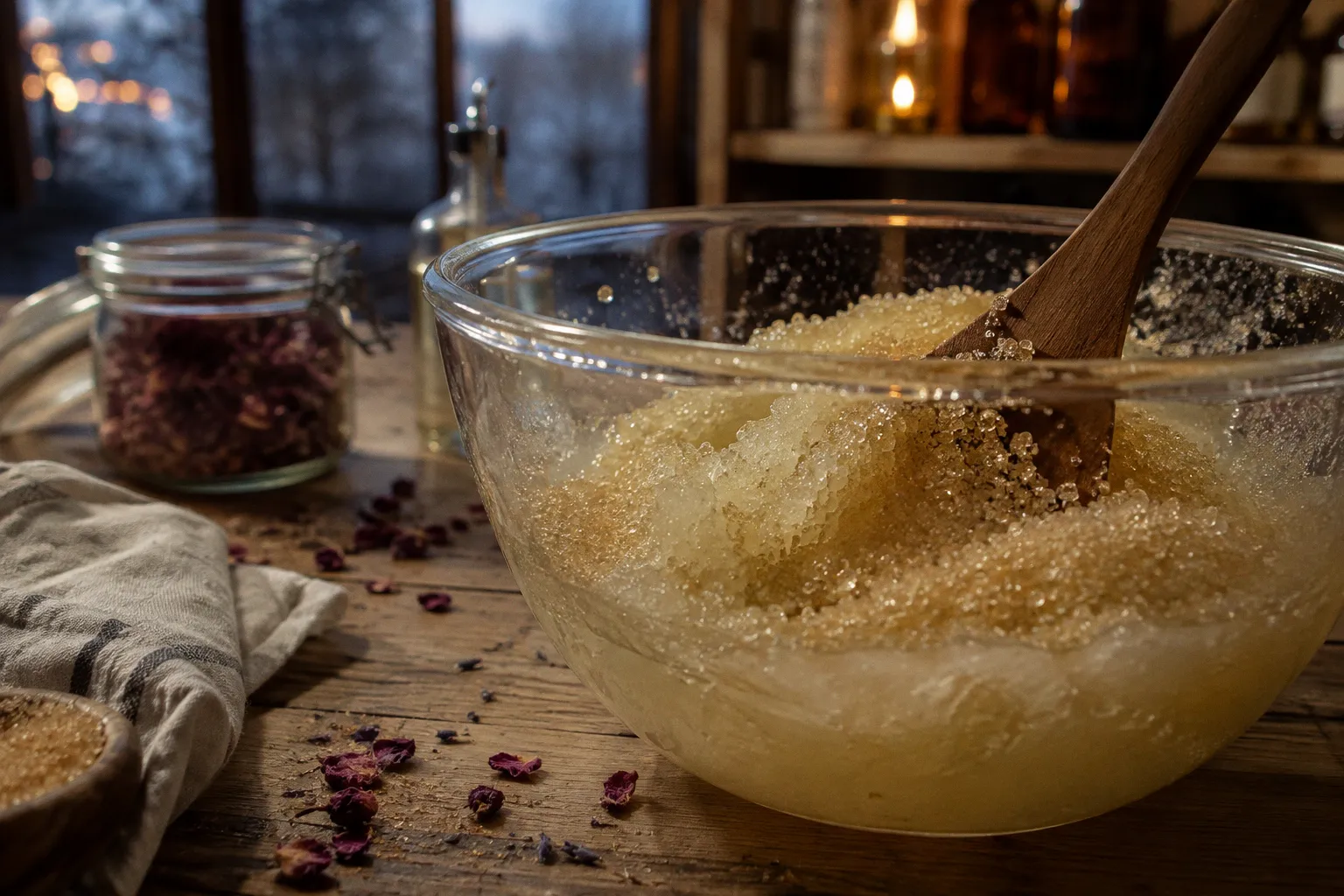
A sugar scrub is a physical exfoliant: sucrose crystals lift loose surface cells through massage, while the sugar begins to dissolve as it meets water. That dissolving quality makes sugar generally gentler than salt or shell-based exfoliants, but it does not make every scrub suitable for every moment. Pressure, timing, skin condition, fragrance, and the oils in a handmade blend all shape the experience.
This sugar scrub skin prep checklist is designed to help you pause before exfoliating, read the condition of your skin, and create a routine that feels restorative rather than overly vigorous.
Start with the skin barrier, not the scrub
Before reaching for a jar, look at the skin you intend to exfoliate. The most beautiful botanical blend cannot compensate for skin that is already irritated, freshly shaved, sunburned, or broken.
A healthy surface does not need to feel perfectly smooth before exfoliation. Small areas of dryness, mild roughness, or the familiar dullness that develops around elbows and knees may be appropriate reasons for a gentle body scrub. What matters is whether the skin is intact and calm enough to receive physical friction.
Run through this first part of the pre scrub skin checklist:
- Look for open cuts, cracks, or wounds. Scrubbing over broken skin can increase irritation and delay comfort.
- Check for sunburn or visibly inflamed areas. Heat, redness, tenderness, and peeling are signs to leave the skin alone.
- Notice active breakouts on the body. Friction can aggravate inflamed blemishes, particularly where clothing already creates rubbing.
- Pay attention to unusual sensitivity. If water, cleanser, or a soft towel suddenly feels sharp or uncomfortable, choose a restorative body oil or butter instead.
- Inspect areas affected by recent hair removal. Exposed follicles and freshly disturbed skin are not ready for mechanical exfoliation.
- Separate roughness from inflammation. Rough skin may respond to a careful scrub; inflamed skin usually needs reduced stimulation and time.
In my work with body-care rituals, I encourage clients to treat this inspection as part of the treatment itself. It is not an interruption before the pleasant part. It is the moment when you decide whether the skin needs circulation and polish, or whether it needs to be enveloped in a quiet layer of moisture.
Exfoliation should meet calm, intact skin; it should never be used to argue with irritation.
A simple sensation check
Warm water can soften the surface and make exfoliation more comfortable, but it can also conceal sensitivity for a few moments. Before applying the scrub, lightly press a clean fingertip against the area. The skin should feel neutral or mildly dry, not hot, raw, or sore.
Do not use the scrub on open wounds, active acne breakouts, sunburned skin, or areas with significant irritation. Mechanical friction can create tiny surface injuries and intensify inflammation, even when the crystals feel soft between wet fingers.
This is especially relevant for handmade scrubs. A blend may contain nourishing plant oils, aromatic botanicals, or a rich sugar base, yet the finished product still has physical particles moving across the skin. Natural does not mean friction-free, and aromatic does not automatically mean soothing.
Prepare the skin with the right amount of moisture
The best texture for sugar scrub application is usually warm, damp skin. This does not mean standing under very hot water until the body feels flushed. A comfortably warm shower is enough to soften surface dryness and allow the sugar crystals to begin dissolving during application.
That small amount of water changes the character of the scrub. Dry crystals remain more distinct and can feel sharper under pressure. Damp crystals soften as you massage, lifting loose surface cells without requiring the same force.
The body scrub preparation steps are simple:
1. Rinse the skin with comfortably warm water. Give the surface a moment to become damp and pliable.
2. Turn the water away from the area you are treating. A scrub placed under a strong stream will dissolve before you can spread it evenly.
3. Scoop a modest amount with clean, dry hands or a clean utensil. This helps preserve the texture of the product and prevents unnecessary water from entering the container.
4. Press the scrub onto the skin rather than dropping it into one concentrated spot. A thin, even layer makes it easier to control the pressure.
5. Massage with small, unhurried circles. Let the sugar and water do the work; your hands do not need to force the result.
6. Rinse thoroughly and pat dry. Avoid rubbing the body briskly with the towel immediately afterward.
7. Follow with a body oil, butter, or balm while the skin still feels slightly receptive to moisture.
The aim is not to erase every trace of texture in one session. Skin has a living surface, and the softest result often comes from restraint. When the scrub begins to feel smooth and nearly dissolved, that is usually a natural signal to stop rather than continue searching for more exfoliation.
How much pressure is enough?
Use the pressure you would use to spread a body lotion, perhaps only slightly more deliberate. If your fingertips whiten from force, if the skin becomes hot during massage, or if the scrub feels scratchy rather than granular and melting, ease back.
Sugar crystals vary in size, and the exact grain that feels comfortable will differ between formulations and skin types. A coarse body scrub may suit the soles of the feet but feel too aggressive on the chest, inner arms, or freshly dry hands. A fine-grain formula may be more appropriate for areas where the skin is delicate or where clothing causes repeated friction.
Never use a body sugar scrub on the face simply because the crystals dissolve. Facial skin is thinner and more prone to micro-tears, and a product designed for elbows or legs may be too abrasive for it.
Respect the 24–48 hour gap before hair removal
One of the most common timing mistakes is placing exfoliation directly beside shaving, sugaring, or another hair-removal method. These routines can complement one another, but they should not be stacked in the same narrow window.
For physical exfoliation, leave a gap of 24 to 48 hours before hair removal. Scrubbing immediately before or after shaving or sugaring can increase sensitivity and irritate exposed follicles. The skin may feel polished in the moment, but the following hours can bring stinging, redness, or a tight, uncomfortable sensation.
A workable rhythm looks like this:
- Use the sugar scrub one or two days before hair removal.
- Allow the skin to return to its usual baseline.
- Perform hair removal on clean, calm skin without adding another abrasive step.
- Afterward, keep the routine simple and restorative until sensitivity has settled.
If your skin is easily reactive, choose the longer end of that window or extend it according to how your body responds. The calendar is a guide; the skin’s condition is the final measure.
The same principle applies to other strong or stimulating body treatments. Do not place a physical scrub in the same routine as a chemical peel, high-percentage AHA or BHA treatment, or prescription retinoid without professional guidance. Combining exfoliating methods can create more irritation than benefit, particularly when the skin is already dry or compromised.
Plan exfoliation around self-tanning
Sugar scrub preparation can be useful before self-tanning, but timing determines whether the result looks even. Exfoliating the day before self-tanning helps remove loose surface cells so the tanning product can absorb more consistently.
Exfoliating immediately before tanning is more likely to leave the skin unevenly prepared. Some areas may be freshly polished while others retain moisture or surface texture, and the result can appear blotchy. Skin may also be more sensitive after the scrub, especially if the massage was prolonged or the formula contained a strong fragrance.
For a calmer pre-tan routine:
1. Exfoliate the day before, using warm damp skin and light pressure.
2. Rinse carefully, then apply a plain, nourishing moisturizer or body oil if appropriate for the tanning product you plan to use.
3. Let the skin rest overnight.
4. On tanning day, keep the surface clean and free from heavy residue unless the product instructions specify otherwise.
5. Avoid trying to correct uneven color by scrubbing again immediately. Give the skin time before adding more friction.
Pay particular attention to elbows, knees, ankles, and the tops of the feet. These areas can be naturally drier and may absorb tanning products differently. They may benefit from a little extra moisture, but not necessarily from a more aggressive scrub.
Work around active treatments and breakouts
A body-care ritual can be botanical, sensorial, and deeply comforting while still needing boundaries. Turmeric body polishes, fragranced sugar blends, and richly emollient scrubs each have a particular character. They should not be treated as interchangeable with therapeutic care for inflamed or medically affected skin.
If a breakout is active, avoid scrubbing directly over it. Mechanical action can spread irritation across the surrounding area and make the skin feel more tender. Instead, cleanse gently and use a barrier-supportive product that does not require vigorous massage.
The same pause applies when the skin is reacting to a new active product. If you have recently introduced a high-strength exfoliating formula, retinoid, or other treatment that causes peeling or sensitivity, a sugar scrub is not the next layer to add. Allow the skin to settle and follow the directions provided by the prescribing clinician or product manufacturer.
This is where a body oil can be a more restorative choice than a scrub. A few drops pressed over damp skin create slip and softness without the added friction. A whipped shea body butter can offer a more enveloping finish on areas that feel rough, while a hand or foot balm can be reserved for concentrated dryness where a full-body exfoliation would be unnecessary.
Match the product to the area
Different body zones need different kinds of attention:
- Elbows and knees: These often tolerate a carefully applied scrub followed by a rich butter.
- Legs: Use light pressure, particularly if the skin is dry from shaving or seasonal weather.
- Chest and upper arms: Choose a finer texture and avoid scrubbing over active blemishes.
- Hands: A gentle sugar scrub may be followed by a restorative balm, but skip cracked cuticles or open splits.
- Feet: Coarser texture may be suitable for intact soles, while fissured heels need protection rather than abrasive polishing.
- Neck and face: Use products specifically formulated for those areas; a body scrub is not automatically appropriate.
The most effective routine is often the least dramatic one. When the skin needs comfort, an oil pressed into dampness can be more useful than another attempt to make the surface feel perfectly smooth.
Patch-test handmade botanical blends
Handmade skincare can feel wonderfully personal because the texture, scent, and oil phase are often more distinctive than in a mass-produced formula. That individuality is also why a patch test deserves a place in your sugar scrub skin prep checklist.
Before applying a new scrub over a large area, use a small amount on a discreet patch of intact skin. Choose an area that is easy to observe and leave it undisturbed. Watch for itching, burning, marked redness, swelling, or a delayed reaction.
There is no single universal waiting period for every handmade blend. The appropriate interval can vary with the ingredients, the person’s sensitivity, and their history of reactions. If you are prone to allergies or the formula contains unfamiliar plant oils, essential oils, spices, or botanicals, take a more cautious approach and follow the maker’s guidance. Do not treat a pleasant scent or a short-lived application as proof that the blend is suitable for all-over use.
A patch test is not a guarantee against every possible reaction, but it gives you a quieter way to introduce the product. It also lets you assess the sensory experience: whether the scent feels grounding or overpowering, whether the oil leaves a comfortable veil or a heavy residue, and whether the crystals dissolve at a pace that suits your skin.
Keep the scrub fresh and the routine clean
Use clean hands or a clean scoop, and keep water out of the container whenever possible. Handmade products may contain ingredients with different storage needs, so follow the maker’s directions for shelf life, temperature, and handling. Changes in scent, color, texture, or appearance are reasons to stop using the product rather than trying to refresh it with extra oil or water.
A typical homemade starting point is a 2:1 ratio of sugar to oil, but the ratio is only a formulation guide, not a safety guarantee. The type of sugar, the fineness of the crystals, the oil selected, and the amount of water on the skin all affect how the scrub behaves. A formula that feels smooth in the jar can still feel too abrasive when used with pressure.
Know when to choose moisture instead
Exfoliation has a place in a body ritual, but it should not become a reflex every time the skin looks dull. Repeated dryness can sometimes reflect a disrupted moisture barrier, and adding more physical exfoliation may make the surface feel temporarily smoother while leaving it more vulnerable afterward.
Choose a body oil, whipped butter, or balm instead of a scrub when:
- the skin feels hot, raw, or unusually tender;
- there are visible cracks, cuts, or active irritation;
- you have recently shaved, sugared, or used another hair-removal method;
- the skin is peeling after sun exposure;
- a chemical or prescription treatment has already caused sensitivity;
- the urge to scrub comes from frustration rather than actual surface roughness.
Apply a restorative product to slightly damp skin, using broad, slow strokes or gentle pressing motions. This keeps the ritual tactile without asking the skin to tolerate abrasion. If dryness or irritation persists, becomes painful, or repeatedly returns despite a gentle routine, seek advice from a qualified healthcare professional rather than escalating the scrub.
The right preparation is not a complicated ceremony. It is a sequence of small decisions: inspect the barrier, choose the right day, dampen the skin, reduce pressure, rinse without friction, and finish with moisture. Sugar can soften as it dissolves, but your technique determines whether the experience remains kind.
A well-prepared exfoliating routine leaves the body feeling supple, clear, and quietly awake—not tight, polished to discomfort, or in need of repair. Let the skin set the pace. A restorative ritual begins before the first crystal touches the surface.