Why Body Oil Sits on Skin: Common Mistakes and Fixes
You step out of the shower, dry yourself off completely, grab your favorite body oil, and spread it across your arms, legs, and torso. A few minutes pass. The oil is still sitting on top of your skin.
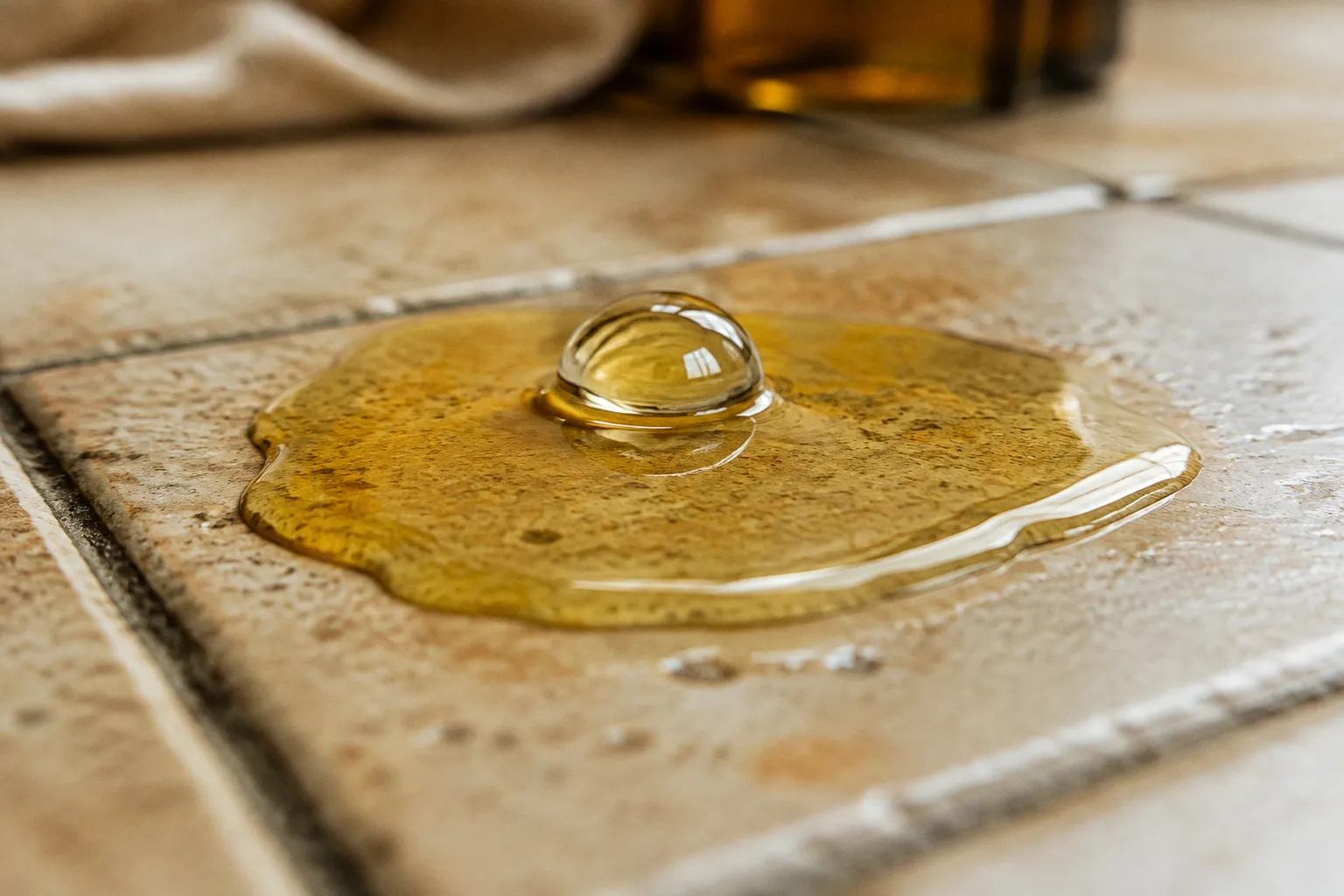
Your shirt clings to your stomach the moment you pull it on. Your legs feel tacky under your jeans. You're convinced the product is useless, or worse, that your skin is "rejecting" it.
Neither is true. The product is doing exactly what it was designed to do. The problem is your technique.
Let me cut through the noise here. Body oil isn't a moisturizer in the traditional sense. It's an occlusive. That single word changes everything about how you should apply it, when you apply it, and what you should expect once it's on your skin.
The Occlusive Trap: Understanding How Oils Actually Work
Here's the mistake most people make: they think body oil delivers hydration to their skin. It doesn't. Body oil locks in moisture that is already there. That's the entire job of an occlusive.
Skin holds water in its outer layer, and that water content is what makes skin feel soft, pliable, and healthy. The moment you step out of a warm shower and expose wet skin to open air, that water starts evaporating right off the surface. If you don't seal it in quickly with an occlusive layer, it disappears. You're left with dry-feeling skin no matter how much oil you put on.
So when you towel off completely and then apply oil to bone-dry skin, you're sealing in nothing. There's no moisture left to seal. The oil has nothing to grab onto, so it just sits on the surface, acting like a glossy film. That's the greasy residue you keep complaining about.
The fastest way to fix sticky, useless body oil: stop drying your skin completely. Leave it damp. Then apply.
This is the foundational shift. Once you understand that body oil is a sealant, not a source, the entire routine clicks into place.
The Damp Skin Rule: Mastering the 5-Minute Application Window
The window between stepping out of the shower and the oil going on matters more than the bottle you're holding. You have between two and five minutes. That's it. After that, the surface water on your skin has mostly evaporated, and you're back to applying oil to a dry canvas.
Here's the play-by-play:
- Take a short shower with lukewarm water. Hot water strips your skin's natural lipid layer and leaves you feeling tight the moment you turn the tap off. That's already a setback.
- Step out and pat dry with a clean towel. Don't rub. Don't stand there toweling off for ten minutes. Pat quickly, leaving the skin visibly damp. You're aiming for skin that glistens slightly but isn't dripping.
- Apply your body oil immediately, within two to five minutes of getting out of the shower. Pump the oil into your palm, rub your hands together to warm it, then press and smooth it onto your skin using long, downward strokes. Don't scrub it in. The goal is even coverage, not friction.
- Wait a minute or two before getting dressed. The oil needs a moment to settle into the damp layer, not get wiped off onto cotton.
The damp skin gives the oil something to bind to. Plant lipids and water mix at the surface, then the oil forms a breathable seal over the top. You get soft, hydrated skin, not a slippery mess. It's a small change in routine, but it flips the entire outcome.
Botanical vs. Mineral: Why Your Oil Choice Matters for Absorption
Not all oils behave the same on skin. The split that matters most here is between mineral oils and botanical oils, and once you see the difference, you'll know exactly which shelf to shop from.
Mineral oil is a petroleum byproduct. It's a fine, clear liquid that sits on top of the skin and forms a temporary outer film. It doesn't integrate with your skin's natural lipid structure, doesn't penetrate, and doesn't feed the barrier anything useful. It just creates an artificial surface layer that gives the illusion of moisture. The moment you wash it off, your skin feels exactly as it did before.
Botanical oils are different. They're pressed or extracted from plants, including nuts, seeds, flowers, and fruits, and they contain fatty acid profiles that closely mirror the lipids your skin makes on its own. Your skin recognizes these structures and absorbs them in a way it never will with a petroleum-based product.
Look at the split between fatty acid families:
- Oleic acid-rich oils like sweet almond and olive oil tend to feel richer and heavier. They soften and condition the skin, which is great for rough patches, elbows, and knees.
- Linoleic acid-rich oils like sunflower and safflower oil are lighter, absorb faster, and actively help support the skin barrier. They're a better match for everyday full-body application, especially if your skin tends reactive or acne-prone on the torso and back.
If you've been using a mineral-based product and wondering why it never seems to disappear, that film you're feeling is the entire experience. It's not absorbing because it can't. Swap to a botanical oil and run the damp-skin routine. You'll notice the difference within a single application.
Clearing the Path: How Exfoliation Prevents Surface Buildup
Even with perfect application technique and a great botanical oil, you're going to hit a wall eventually if you skip exfoliation. Here's why: dead skin cells accumulate on the surface in layers. Body oil has to get past that layer to do its job, and if the layer is thick, the oil just sits on top of dead cells instead of reaching the living skin underneath.
This is the issue most people don't realize is happening. They buy the right oil, they apply it the right way, and they still get that greasy, patchy finish. The culprit is almost always a few weeks of skipped exfoliation.
A gentle exfoliation routine once or twice a week is the fix. You don't need anything aggressive. A mild sugar scrub applied in circular motions on damp skin in the shower works perfectly. Rinse thoroughly, finish your shower, towel off to slightly damp, then apply your body oil as normal.
What you're doing is removing the dead-cell barrier so the next application can actually sink in. Exfoliation also stimulates cell turnover, which keeps the skin surface smoother and helps the oil spread more evenly across your body instead of pooling in some patches and skipping others.
A small note on timing. Don't exfoliate and immediately apply body oil to bone-dry skin. The whole point is layering damp skin with oil after you've cleared the path. Exfoliate in the shower, rinse well, leave the skin damp, then apply. Same window. Same rule.
Decoding Comedogenic Ratings to Find Your Perfect Oil Match
If you've ever broken out along your shoulders, chest, or back after using a body oil, you need to know about comedogenic ratings. A dermatologist named James Fulton published a scale in 1989 that scores oils and ingredients from 0 to 5 based on how likely they are to clog pores. Lower numbers mean less clogging. Higher numbers mean more.
This isn't a perfect predictor for every person, but it gives you a starting framework when you're staring at a shelf full of oils and trying to figure out which one your skin will tolerate.
Here's a quick reference for some common botanical oils:
| Oil | Comedogenic Rating | What It Means on Skin |
|---|---|---|
| Sunflower seed oil | 0 | Very low clogging risk, lightweight, barrier-supporting |
| Safflower seed oil | 0 | Very low clogging risk, fast absorption |
| Rosehip oil | 1 | Low clogging risk, lightweight, good for most skin types |
| Sweet almond oil | 2 | Moderate clogging risk, rich feel, fine for most body areas |
| Olive oil | 2 to 3 | Moderate to higher clogging risk, heavier texture |
| Coconut oil | 4 | High clogging risk for many, especially on the torso and back |
If you break out easily, stay in the 0 to 1 range for the chest, back, and shoulders. The higher-rated oils can still work on legs, arms, and feet where pore clogging tends to be less of an issue.
A quick caveat: comedogenic ratings are a guide, not a verdict. Some people use olive oil for years without a problem. Others break out from rosehip. Test a small patch on your inner arm before committing to a full bottle, especially if you have acne-prone or reactive skin.
Putting It Together: Your Actual Body Oil Routine
Skip the seven-product rotation. You don't need it. Here's the simple sequence that solves the absorbing-or-not problem from every angle:
1. Shower with lukewarm water. Hot water strips the skin barrier and leaves you starting from a deficit.
2. Cleanse with a mild body wash. Nothing that leaves a heavy film. You're trying to get clean skin, not prep for a coating.
3. Exfoliate gently once or twice a week. Sugar scrub, soft cloth, or a mild acid-based body exfoliant. Don't overdo it.
4. Pat dry, leaving skin damp. Don't go bone-dry. The dampness is the active ingredient here.
5. Apply botanical body oil within two to five minutes. Press it into the skin in long downward strokes. Don't scrub.
6. Wait a moment before dressing. Let the oil settle before it transfers onto your shirt.
That's the whole playbook. No gimmicks, no five-step layering, no chasing the newest luxury oil on the market. The technique does the heavy lifting.
Why You're Still Getting Residue
If you've gone through all the above and still feel a greasy film afterward, run through this quick diagnostic:
- You're using too much. A little oil goes a long way. Start with three to four drops per limb. You can always add more.
- Your skin isn't damp enough. If you can see dry patches before applying, you've over-dried. Mist your skin with a little water and reapply.
- Your oil is mineral-based. It'll always sit on top. That's its nature. Switch the product.
- You're exfoliating too aggressively or too often. Over-exfoliation damages the barrier and can actually make products sting and sit strangely. Once or twice a week is plenty.
- Your skin barrier is already compromised. If you've been over-exfoliating, using harsh soaps, or shaving with a poor technique, your barrier may be unable to absorb anything properly. Pause aggressive products, focus on a gentle routine for two weeks, then try again.
Most people fix their absorption problem with the damp-skin technique alone. The rest is fine-tuning.
Body oil seals, it doesn't soak in. Lock in damp skin within five minutes of the shower, and you'll never fight a greasy film again.
The oil isn't broken. The bottle isn't wrong. The technique has been off. Get the window right, pick a botanical oil suited to your skin type, exfoliate lightly once or twice a week, and stay clear of petroleum-based products if you want real absorption. Do that, and your body oil becomes one of the most effective steps in your entire skincare routine, not a greasy afterthought.