Botanical Maceration: How Herbal Oil Infusions Work
A well-made herbal oil infusion has a particular kind of presence on the skin: it feels softened rather than slick, gently enveloping rather than heavy, with the quiet botanical scent of leaves, petals, or roots carried into a restorative oil.
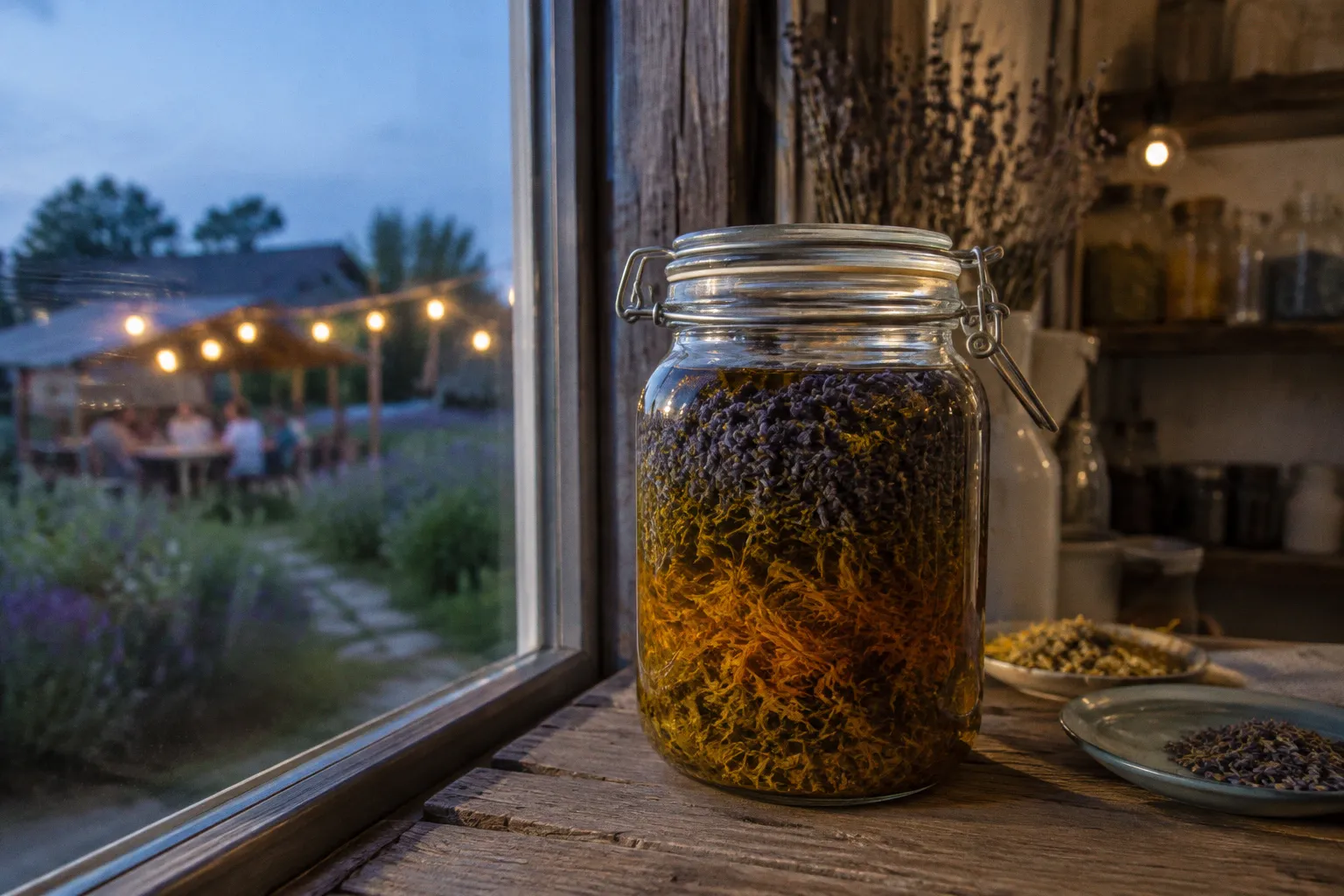
Yet beneath that tactile comfort is a precise extraction process. Botanical maceration in handmade skincare is not simply a matter of placing herbs in a jar and waiting. The plant material, the carrier oil, the temperature, the moisture level, and the storage conditions all shape what finally reaches the skin.
Botanical maceration is the process of steeping plant material in oil so that fat-soluble compounds move from the botanical into the lipid carrier. The resulting infused oil may bring plant pigments, antioxidants, fat-soluble vitamins, and other bioactive constituents into a balm, facial oil, body butter, salve, or beard treatment. It is gentler and less concentrated than an essential oil, and it belongs to a different family of botanical preparations altogether.
The most dependable infusions begin with dry plant material, a stable carrier, and enough time for the oil to become saturated with the character of the herb. When those foundations are handled carefully, the process becomes both ritualistic and remarkably practical.
The chemistry of lipid extraction: moving botanical compounds into oil
Plants hold their useful constituents in different parts of their structure. Some compounds dissolve readily in water, while others are more comfortable in fat. Botanical maceration is designed for the latter group: fat-soluble vitamins, pigments, antioxidants, and selected bioactive compounds that can migrate into an oil base.
The carrier oil acts as the receiving environment. As dry flowers, leaves, roots, or bark rest in the oil, compatible constituents gradually disperse through the lipid. The oil may deepen in color, become more aromatic, or take on a subtly different texture. These changes are not the whole story, but they are often visible signs that the plant and carrier are no longer separate materials.
This is why a calendula-infused oil, for example, is not merely olive oil with petals floating inside it. The petals provide plant compounds that the oil can hold and distribute across the skin. The finished material remains an oil, but its botanical profile has been changed through contact and time.
That distinction matters when choosing how to use an infusion. An infused oil is generally suited to formulas where you want the emollience of a carrier oil alongside the supportive qualities of a botanical. It can bring softness to a dry body balm, slip to a beard oil, or a comforting finish to a facial oil designed around barrier support.
It should not be described as identical to an essential oil. Essential oils are concentrated volatile extracts, commonly produced through steam distillation or related methods. An infused oil contains diluted, fat-soluble plant constituents held within the carrier. The aroma is usually quieter, and the extraction profile is different.
A maceration does not turn a carrier oil into an essential oil; it gives the carrier a botanical memory, carried in a much gentler and more skin-comforting form.
The final result also depends on the herb itself. A delicate flower, a resinous plant, and a dense root do not release their constituents at the same pace. Particle size, dryness, the proportion of herb to oil, and the length of infusion all influence the character of the batch. There is no universal chemical yield for a home or small-batch maceration, and the color of an oil cannot be treated as a laboratory measurement of potency.
For an independent formulator, this is both the beauty and the limitation of the process. Botanical maceration is a meaningful way to work with plants, but it is not a standardized pharmaceutical extraction unless it is carried out under controlled laboratory conditions with validated testing.
The moisture trap: why dried botanicals are non-negotiable
The most important practical rule in herbal oil infusion is also the one most often softened into a suggestion: use thoroughly dried botanicals.
Fresh leaves and flowers contain water. Even when they appear delicate and clean, their moisture can create small pockets of humidity inside the oil. These damp microenvironments may support mold and microbial growth. In poorly controlled conditions, fresh plant material can also introduce serious bacterial hazards, including the risk associated with Clostridium botulinum.
Oil alone does not make a fresh botanical safe. A waterless formula may be less hospitable to many microorganisms than a cream or lotion, but it is not automatically sterile, and fresh plant tissue changes the safety profile of the entire preparation.
Dry botanicals are preferred because much of that free moisture has been removed before the plant enters the carrier. The drier the material, the lower the likelihood that the infusion will become a hidden reservoir for microbial growth. This is especially important when a handmade oil will be sold, gifted, or used over a prolonged period.
When I look at a botanical intended for maceration, I want it to feel crisp and fully dehydrated rather than cool, flexible, or slightly damp. Flowers should not feel fresh from the garden. Leaves should not bend with the softness of living plant tissue. Roots and bark should be dry throughout, not only on the surface.
A useful preparation sequence is:
1. Select a fully dried botanical. Choose plant material from a reliable source and remove any pieces that show discoloration, visible moisture, or signs of spoilage.
2. Prepare the material according to its structure. Delicate flowers may be used whole or lightly broken apart, while roots and bark generally benefit from smaller pieces so the oil can reach more surface area.
3. Use clean, completely dry equipment. A trace of water left in a jar, funnel, spoon, or strainer can undermine an otherwise careful oil infusion.
4. Cover the plant material with the carrier oil. The botanicals should remain submerged, with no exposed plant matter sitting above the oil line where it can meet air and moisture.
5. Inspect the infusion during its resting period. Watch for cloudiness, bubbling, unpleasant sour or musty odors, visible mold, or a change that suggests contamination rather than a normal botanical shift.
The goal is not to create a sterile product in a kitchen environment. The goal is to reduce avoidable risk by beginning with dry materials, clean tools, and a stable process. If fresh herbs are important to a particular formulation, that project belongs in a more controlled preservation and safety-testing framework rather than an improvised jar of oil.
Cold versus heat: balancing time, speed, and compound integrity
There are two familiar approaches to botanical maceration: the traditional cold infusion and the faster warm method. Both can work, but they create different rhythms for the formulator.
Traditional cold infusion
The cold method, sometimes called the folk or simplers method, is the slow, unhurried approach. Dry herbs are placed in a carrier oil and allowed to steep for approximately two to six weeks. During this time, the oil gradually takes on the botanical’s color and character.
Cold maceration is appealing when the process itself is part of the formulation practice. It requires less direct intervention and avoids exposing delicate plant constituents to additional heat. The jar can be stored in a suitable location away from excessive light and temperature fluctuations while the infusion develops.
This method rewards patience, but patience does not replace observation. The botanicals should remain submerged, and the oil should continue to smell clean and fresh. A longer infusion is not automatically a stronger or better infusion. After a certain point, the carrier may gain little from continued contact, while the plant material can contribute more sediment, color instability, or oxidative burden.
Cold infusion is particularly harmonious with small-batch work where the formulator can plan ahead. It suits a seasonal rhythm: preparing an infusion, allowing it to rest, straining it carefully, and then incorporating it into a balm or oil formula once the carrier has settled.
Warm infusion
The warm method shortens the process by encouraging movement between the botanical and the carrier. A quick heat method commonly takes about four hours, with the oil held between 120°F and 140°F, or approximately 49°C to 60°C.
This temperature range is warm enough to support a faster extraction while remaining moderate enough to help protect thermosensitive botanical compounds. Higher heat may seem efficient, but it can damage delicate constituents and accelerate oxidation in the carrier. It may also darken the oil in a way that reflects overheating rather than a more complete extraction.
A gentle water-bath approach is generally easier to control than placing an oil-filled vessel directly over a strong heat source. The oil should warm gradually, not simmer. There should be no frying, bubbling, or vigorous movement in the jar. The process is meant to feel like a steady opening of the botanical, not a cooking step.
The distinction between the two methods can be summarized simply:
| Parameter | Cold maceration | Warm maceration |
|---|---|---|
| Typical duration | About 2 to 6 weeks | About 4 hours |
| Temperature | Ambient or gently controlled | Approximately 120°F–140°F / 49°C–60°C |
| Main advantage | Slow, gentle contact with minimal heat | Faster preparation for planned batches |
| Main concern | Extended exposure to air, light, and plant sediment | Overheating and damage to heat-sensitive constituents |
| Best suited to | Patient seasonal or small-batch preparation | Time-sensitive formulation work with careful temperature control |
Neither method guarantees a superior oil. The better choice depends on the botanical, the carrier, the intended use, and the consistency required from the finished batch. If a product is being made commercially, a repeatable written process matters more than choosing the method that sounds most traditional.
Speed is useful in formulation, but heat should remain a quiet assistant—not the dominant force in the jar.
Choosing a carrier that can hold the infusion
The carrier oil is not a passive container. It determines how the finished maceration feels, how long it remains fresh, and how easily it fits into a skincare formula.
For long-lasting infusions, oils rich in saturated or monounsaturated fatty acids are generally preferred because they tend to have better oxidative stability. Olive oil and fractionated coconut oil, also known as MCT oil, are common examples of carriers with relatively long shelf lives. They provide a dependable foundation for botanicals and can be used across body, facial, and beard-care formulas, depending on the desired skin feel.
Olive oil creates a cushiony, nourishing finish and can be particularly comforting in salves and body oils. Fractionated coconut oil is lighter and more fluid, with a clean slip that works well in beard oils, massage blends, and lighter anhydrous preparations.
More delicate oils can still be valuable, but they require more care. Rosehip seed oil, for instance, is more easily oxidized than a highly stable carrier. It may be beautiful in a facial blend, but it is not always the most forgiving base for a long maceration. In some formulas, it makes more sense to create the botanical infusion in a stable carrier and add the more oxidation-prone oil later, once the infusion has been strained.
When selecting a carrier, I consider four connected qualities:
- Oxidative stability: A more stable oil gives the infusion a longer and quieter life.
- Skin feel: The oil should suit the product’s purpose, whether that means dry slip, cushion, glide, or a protective finish.
- Aroma: A strongly scented carrier may compete with the botanical, while a neutral or softly scented oil allows the plant character to come forward.
- Formula compatibility: The infused oil should behave predictably in the balm, butter, serum, or beard product where it will eventually be used.
A carrier that smells fresh at the beginning can still oxidize over time. A botanical’s earthy scent may deepen naturally, but a sharp, stale, crayon-like, or paint-like odor is not a desirable sign. Sensory assessment is not a substitute for laboratory testing, yet it remains a useful first line of observation for small-batch makers.
The amount of botanical used also deserves restraint. More plant material does not automatically mean more benefit. An overcrowded jar can make it difficult to keep every piece submerged, can complicate straining, and can add unnecessary sediment to the finished oil. A calm, fully covered infusion is usually more reliable than a densely packed one.
Straining, settling, and protecting the finished oil
Once the maceration has reached its intended stage, the plant material should be separated from the carrier. Straining is not merely a cosmetic step. Residual botanical particles continue to interact with the oil and may increase the amount of sediment, air exposure, and oxidative material in the final preparation.
A fine strainer or clean filtration material can help remove the larger pieces, while a second settling period allows heavier particles to fall to the bottom. The oil can then be poured gently into a clean, dry container, leaving the deepest sediment behind rather than transferring every last fragment into the finished batch.
Avoid squeezing the botanicals aggressively unless the method specifically requires it and the formulator understands the consequences. Pressing can force fine plant particles and trapped moisture into the oil, making the infusion cloudier and less stable. Clarity is not always essential in handmade skincare, but unnecessary debris can shorten the product’s useful life and make quality harder to assess.
Storage is equally influential. Light, heat, oxygen, and repeated opening all place stress on an oil. A tightly closed, suitably sized container leaves less air above the product than an oversized jar. Amber or opaque packaging can help reduce light exposure, and a cool, stable storage area is preferable to a bright windowsill or a warm shelf near a radiator.
Vitamin E may be used as an antioxidant to help slow oxidation in anhydrous oil systems, according to the requirements of the formula. It is not a broad-spectrum antimicrobial preservative, and it does not make a water-containing or contaminated product safe. Water-soluble preservatives such as Liquid Germall Plus are not designed to protect a pure oil infusion from oxidation. The type of protection must match the type of instability being managed.
This distinction is central to handmade formulation:
- Antioxidants help slow the deterioration of oils caused by oxidation.
- Broad-spectrum preservatives help control microbial growth in formulas containing water, when used at the correct level and under suitable conditions.
- Clean handling and dry botanicals reduce the chance of introducing contamination in the first place.
- Testing is the only dependable way to establish the safety and stability of a product intended for broader distribution.
An anhydrous formulation can still fail. It can become rancid, contaminated by damp materials, or inconsistent from one batch to another. The absence of water narrows certain risks; it does not remove the need for disciplined formulation.
Shelf life: why the carrier matters more than the calendar
Dry herb oil infusions commonly have a shelf life ranging from approximately six months to three years, but that broad range should never be treated as a universal expiration date. The underlying carrier oil, the dryness of the botanical, the storage conditions, the amount of oxygen in the container, and the handling of the batch all influence longevity.
A stable carrier stored carefully may support a longer-lasting infusion. A fragile carrier, poor sealing, repeated exposure to heat, or a botanical that was not fully dry may shorten that window considerably.
For small-batch makers, it is helpful to record the details that make each batch traceable:
- The botanical name and plant part used.
- Whether the botanical was purchased dried or prepared in-house.
- The carrier oil and its lot or purchase date.
- The infusion method, temperature, and duration.
- The date of straining and final packaging.
- Any changes in aroma, color, clarity, or texture noticed during storage.
These notes do not create a laboratory stability study, but they turn an informal kitchen ritual into a repeatable formulation practice. Over time, they reveal which carriers remain fresh, which botanicals contribute too much sediment, and which process produces an oil with the most consistent feel.
For products sold directly to customers, the responsibility becomes broader. Local regulations for cottage cosmetics and handmade skincare vary, and the product maker must understand the safety, labeling, and documentation requirements that apply in the relevant market. A beautiful botanical story cannot compensate for an unclear process or an unsupported shelf-life claim.
Using botanical maceration in handmade skincare
Once strained and assessed, an infused oil can become part of many anhydrous products. It may serve as the main carrier or as one component within a wider oil blend.
In a body balm, the infusion can soften the feel of waxes and butters while bringing a warm botanical dimension to the formula. In a beard oil, a lighter carrier such as MCT can provide glide without leaving the hair feeling coated, while the infused component adds depth and a more ritualistic application. In a facial oil, the choice becomes more personal: the finish must suit the skin’s comfort, the rest of the formula, and the user’s tolerance for richness and aroma.
The most restorative way to use an infusion is usually the simplest. Warm a small amount between the fingertips, notice the texture before applying, and press or smooth it onto slightly damp skin where appropriate. The slow movement gives the oil time to spread evenly and keeps the routine from becoming another hurried task.
I encourage formulators to think in layers of experience:
1. First comes the touch. Does the oil spread easily, or does it drag? Does it leave a soft veil or a heavy film?
2. Then comes the botanical character. Is the scent gentle and coherent with the product, or does it feel stale, sharp, or overpowering?
3. Next is the after-feel. Does the skin remain comfortable after the initial application, with softness that feels nourished rather than greasy?
4. Finally, consider the ritual. Does the formula invite consistent use? A product can be technically elegant and still fail if its texture discourages the person using it.
Botanical ingredients are often described in grand language, but their most dependable contribution may be quieter: a more pleasant application, a comforting sensory profile, and a well-chosen lipid base that supports the skin’s surface without unnecessary aggression. Handmade skincare benefits from that kind of restraint.
Macerated oils are also useful in beard care because facial hair can make the skin beneath feel neglected. A carefully chosen infusion can be worked through the beard and gently pressed into the skin below. The goal is not to saturate the hair. It is to create a smooth, restorative finish that reduces the rough sensation of dryness and makes the daily application feel deliberate.
Common mistakes that weaken an infusion
Most problems in botanical maceration come from a small number of avoidable habits. The process is forgiving in appearance but not careless in its fundamentals.
Using fresh botanicals without controlling moisture
Fresh flowers and leaves may look more vibrant, but their water content creates a more demanding safety problem. Without validated controls, they are not the sensible default for an oil infusion.
Heating by instinct rather than measurement
An oil that feels warm to the hand may already be too hot for delicate plant constituents, while a process that barely warms the carrier may not shorten the extraction meaningfully. A thermometer and gentle heat are more dependable than visual judgment.
Choosing a fragile oil for a long infusion
An easily oxidized carrier can become stale before the botanical has finished contributing its character. Stable oils are usually the calmer choice for the maceration stage.
Leaving plant material exposed above the oil
Botanicals that sit at the surface meet air and may also carry residual moisture. Keeping the material submerged helps create a more consistent environment throughout the batch.
Treating color as proof of potency
A darker oil is not automatically a more effective oil. Color can be influenced by the botanical variety, particle size, heat, and the length of contact. Without analytical testing, it cannot establish a standardized concentration.
Assuming an antioxidant is a preservative
Vitamin E can help slow oxidation, but it does not control microbial contamination. It cannot correct the use of damp herbs or compensate for an unsafe process.
Overextending the infusion
Longer is not always better. Once the oil has reached the desired botanical profile, continued contact may add sediment and instability rather than meaningful improvement.
A measured, restorative approach
The best handmade infusions carry two qualities at once: patience and precision. They feel connected to the older apothecary tradition of allowing plants to rest in oil, yet they also respect what modern cosmetic practice has taught us about moisture, oxidation, preservation, and repeatability.
Botanical maceration in handmade skincare works because oil can draw out and hold certain plant constituents that water cannot. The process is straightforward when its boundaries are respected: begin with dry botanicals, choose a carrier with an appropriate shelf life, keep heat controlled, strain thoroughly, and protect the finished oil from light, air, and unnecessary warmth.
A beautiful infusion does not need to promise everything. It needs to be thoughtfully made, sensorially coherent, and honest about what it is. When the preparation is sound, the final oil becomes more than a scented carrier. It becomes a grounding part of the routine—something applied slowly, with enough attention to let the skin feel enveloped rather than managed.
The most restorative formulas are often the ones that ask us to move with care. A jar of botanicals steeping in oil is a small reminder of that: extraction takes time, stability requires attention, and good skin rituals begin long before the product reaches the palm.