Artisan Skincare Brands: Signs of True Quality
The most informative part of an artisan skincare product is usually not the botanical illustration, the amber glass, or the word “natural” on the front label.
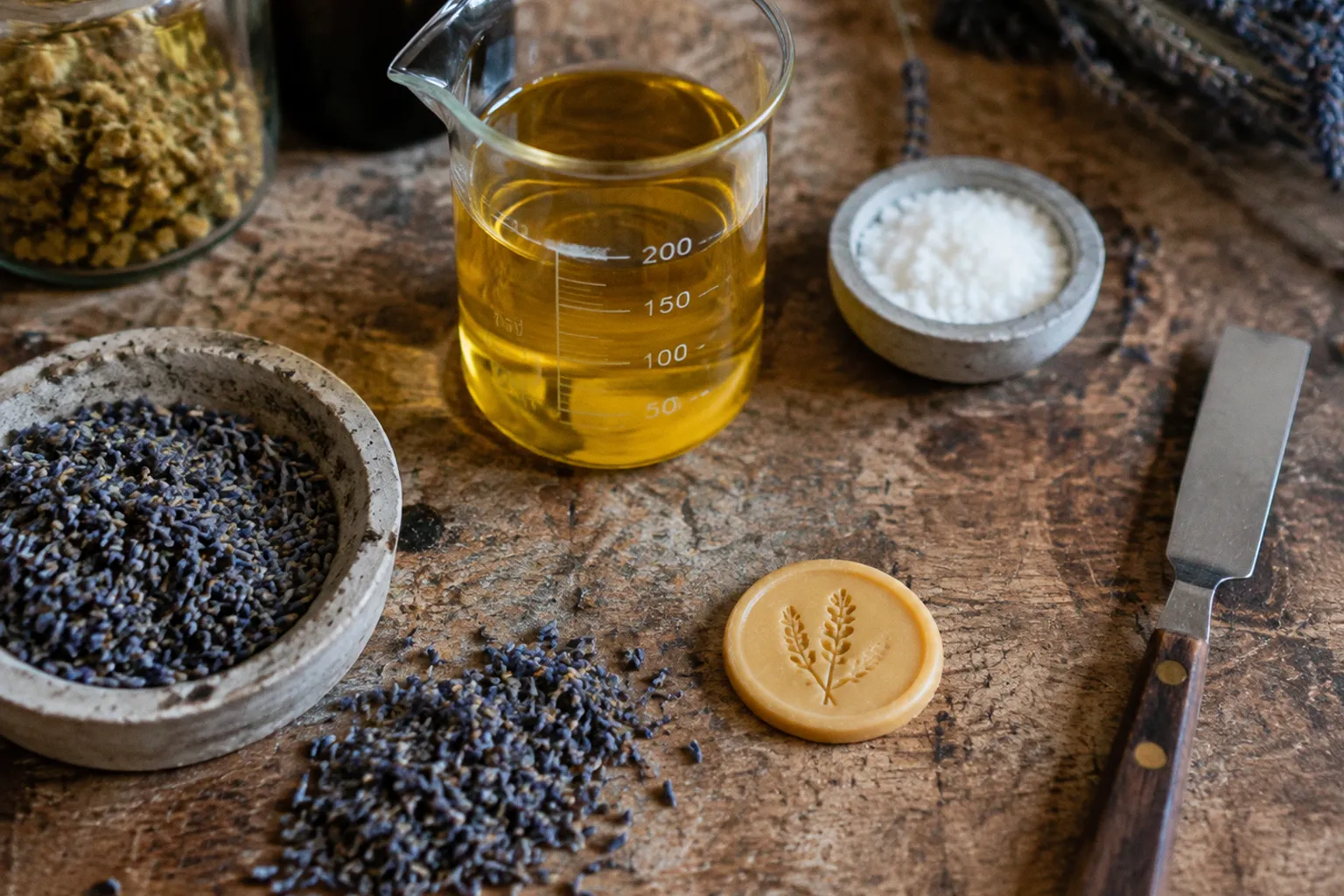
It is the information panel on the back: the full INCI list, the batch code, the manufacturing details, and the period-after-opening symbol.
This is the practical answer to the question of artisan skincare brands and what to look for. Small-batch production can support careful formulation and close quality control, but the phrase itself is not a safety standard. A handmade product still contains emulsifiers, surfactants, preservatives, oils, water, fragrances, and active ingredients. Each component affects stability, oxidation, microbial safety, and skin compatibility.
The useful distinction is not handmade versus industrial. It is transparent, controlled formulation versus attractive but unverifiable marketing.
Decoding the Label: Why INCI Lists Outweigh Front-of-Pack Claims
A cosmetic label should allow you to identify what is in the product without interpreting slogans. The INCI list—the standardized ingredient declaration used for cosmetic labeling—provides more technical information than most front-of-pack claims.
Ingredients are listed in descending order of concentration. The first several components therefore reveal the basic architecture of the formula. In a cream, for example, the early part of the list may show water, humectants, emollients, fatty alcohols, and emulsifiers. In a cleansing bar, it may identify the primary oils or their saponified derivatives. In a beard oil, it should reveal the carrier oils before fragrance components or extracts.
A complete list helps answer several practical questions:
- Is the product water-based or anhydrous?
- Does it contain a functional preservative system?
- Are fragrance materials present?
- Which oils or butters dominate the formula?
- Is the product built around a meaningful active ingredient or mostly around a carrier base?
- Could the formula contain ingredients relevant to a known sensitivity?
The list does not provide every answer. It does not show the manufacturing conditions, the quality of the raw materials, or the result of stability testing. It does, however, establish whether the brand is willing to disclose the formula in a usable way.
Reading an oil-based product
An anhydrous product contains no added water. Common examples include beard oils, body oils, balms, salves, and some cleansing oils. These formulas generally have a lower microbial risk than water-containing emulsions, because microorganisms require available water to multiply. That does not make them immune to quality problems.
Oxidation remains a central issue. Unsaturated fatty acids are vulnerable to oxygen, light, and heat. As oils oxidize, their odor can change and their skin feel can deteriorate. Antioxidants such as tocopherol may help slow oxidation, but an antioxidant is not the same as a preservative. Tocopherol can protect oils from oxidative degradation; it does not replace a broad-spectrum antimicrobial system in a water-based cream.
For an oil or balm, look for:
- A clearly disclosed carrier-oil composition.
- Packaging that limits unnecessary exposure to light and air.
- A batch code or other traceability marker.
- Storage instructions that match the sensitivity of the oils.
- A reasonable use period after opening.
- Fragrance disclosure where applicable.
A high percentage of expensive oil does not automatically indicate higher efficacy. The molecular composition, oxidation stability, skin feel, concentration, and compatibility with the rest of the formula matter more than the price of an individual raw material.
Reading a water-based product
Water changes the formulation problem. Creams, lotions, gels, hydrating mists, shampoos, and liquid cleansers require microbial control because water supports microbial growth. The formula must be preserved, packaged appropriately, and produced under hygienic conditions.
A preservative system is not a sign of poor formulation. It is a mechanism used to control microbial contamination during storage and consumer use. The relevant question is whether the preservative system is suitable for the formula’s pH, water activity, packaging, and intended use.
Preservative-free claims should therefore be treated cautiously. A product may be anhydrous, packaged as a single-use dose, or formulated with another method of microbial control. But a water-based product that presents itself as preservative-free requires a technically credible explanation. “Natural” does not solve the microbial stability problem.
A botanical ingredient can be chemically interesting and still be irrelevant to product safety if the finished formula is unstable or poorly preserved.
Fragrance and essential oils
Essential oils are mixtures of volatile compounds. Their presence does not automatically make a product unsafe, but it does introduce additional variables: concentration, oxidation, photoreactivity, sensitization potential, and compatibility with the intended application area.
A leave-on facial product and a rinse-off body cleanser do not create the same exposure conditions. The concentration and contact time matter. Products used around the eyes, lips, compromised skin, or freshly shaved areas require more conservative formulation decisions than a short-contact wash.
A brand does not demonstrate technical superiority merely by replacing a named fragrance with a collection of essential oils. Both are fragrance systems. The formula must still be assessed as a whole.
The Reality of “Natural” and “Clean” Marketing Terminology
Terms such as “natural,” “clean,” and “non-toxic” do not have legally binding definitions under major cosmetic regulatory frameworks in the European Union or the United States. A brand may use them without meeting one universal, legally fixed threshold for ingredient origin, processing, concentration, or toxicological profile.
This does not mean every product using these terms is poor. It means the terms cannot perform the evaluation by themselves.
“Natural” describes, at most, a marketing position or an intended sourcing philosophy. It does not tell you:
- Whether the product is preserved.
- Whether the ingredients are oxidatively stable.
- Whether the final formula has been tested for stability.
- Whether the raw materials are contaminated or adulterated.
- Whether the product is suitable for sensitive skin.
- Whether the manufacturer follows documented production procedures.
“Clean” is even less useful as a technical category. Different brands apply it to different exclusions: synthetic fragrance, mineral oil, silicones, parabens, sulfates, petroleum-derived ingredients, or other selected groups. Without a defined standard, the word has no consistent analytical meaning.
“Non-toxic” is not a substitute for toxicological assessment. Risk depends on dose, route of exposure, frequency, duration, and the properties of the complete formula. A substance can be acceptable in one application and unsuitable in another. The same principle applies to plant extracts and essential oils.
Certifications versus decorative claims
A certification can be useful when the certifying body, scope, and criteria are identified. A logo without verifiable context is not evidence of a specific manufacturing or ingredient standard.
When evaluating handmade apothecary quality indicators, separate three categories:
| Label information | What it can tell you | What it cannot prove |
|---|---|---|
| “Natural” or “clean” claim | The brand’s marketing position or ingredient philosophy | Safety, stability, preservation, or superior efficacy |
| Full INCI list | Formula components and their order by concentration | Manufacturing hygiene or finished-product performance |
| ISO 22716 reference | Alignment with a recognized cosmetics Good Manufacturing Practice framework when genuinely applicable | That every individual product is effective for every user |
| Batch code | Product traceability and connection to a manufacturing run | That the batch passed every possible safety test |
| PAO symbol | Recommended period of safe and effective use after opening | Exact shelf life under poor storage conditions |
| Organic or botanical certification | Compliance with the named certification scheme, if valid | That the finished product is preservative-free or non-irritating |
The strongest brands do not rely on a single claim. They provide several independent indicators that support one another.
Manufacturing Integrity: ISO 22716 and Safety Standards
Small-batch manufacturing is often described as more attentive because production volumes are lower. That may be true operationally, but batch size alone does not establish process control.
A professional formulator works with documented procedures. These may include raw-material identification, weighing records, equipment cleaning, environmental controls, packaging checks, batch records, and procedures for handling deviations. The purpose is not to make a product look industrial. It is to reduce avoidable variation.
ISO 22716 is the recognized cosmetics Good Manufacturing Practice standard referenced in the available quality framework. A facility operating under this standard is expected to maintain organized procedures for production, quality control, storage, and documentation. When a brand refers to ISO 22716, the claim should describe the manufacturing facility or process clearly rather than using the standard as a vague badge of prestige.
For consumers, a short manufacturer statement is often more useful than a long paragraph of botanical marketing. Look for evidence that the company understands:
- How raw materials are received and identified.
- How different batches are recorded.
- How filling and labeling are controlled.
- How finished products are stored.
- How complaints and adverse reactions are documented.
- How products can be withdrawn or traced if a problem appears.
This is where handmade cosmetics separate into two very different categories. One is a controlled micro-batch process with reproducible records. The other is informal production where the formula, sanitation, and packaging may change from one run to the next.
The special problem of emulsions
Emulsions are more technically demanding than simple oil blends. A cream combines phases that naturally resist mixing, usually an aqueous phase and an oil phase. Emulsifiers, fatty alcohols, polymers, pH modifiers, preservatives, and processing temperature all affect the result.
A cream that looks smooth on the day of production may separate later. Its viscosity may change. The preservative system may perform differently as pH shifts. The container may allow repeated contamination during use.
This is why a small-batch cream should not be judged only by immediate texture. The relevant questions concern the formula over time:
1. Does it remain physically stable?
2. Does the preservative system control microbial growth?
3. Does packaging protect the product during normal use?
4. Does the product remain within its intended pH and viscosity range?
5. Is the batch traceable if a complaint develops?
The same reasoning applies to liquid soap, shampoo, body lotion, and hydrating sprays. A short ingredient list is not automatically safer or more stable. Formulation complexity is not a defect when each component has a defined function.
Traceability and Batch Coding: The Mark of a Professional Formulator
A batch code connects a finished product to a specific manufacturing run. It may identify the production date, formula version, raw-material records, filling operation, or internal quality-control documents.
These codes are typically short, often around four to seven characters, and may appear on the base of a jar, the bottom of a bottle, or the crimp seal of a tube. On boxed products, the code on the outer carton should match the code on the container.
The code is not decorative. It makes a product traceable.
If a customer reports an unexpected odor, separation, irritation, or packaging defect, the manufacturer needs to determine whether the issue is limited to one unit or affects the entire batch. Without a batch code, that investigation becomes more difficult. The manufacturer may not know which raw materials were used, when the product was filled, or which production record applies.
Before buying handmade cosmetics, inspect the physical packaging for:
- A visible batch code rather than only a printed design element.
- Consistent coding between the container and carton.
- A manufacturing date or clear explanation of how shelf life is determined.
- Contact information for the responsible business.
- Directions for storage and use.
- A product name that matches the ingredient declaration.
A missing code is not definitive proof of a dangerous product. Small businesses can make labeling errors. It is, however, a meaningful weakness in quality management. A brand that cannot identify its own production runs has limited ability to investigate problems.
What traceability says about the business
Traceability also reveals the maturity of the operation. A formulator who records batches can compare changes in raw-material suppliers, processing temperature, fragrance load, or packaging. That allows the formula to be improved on the basis of evidence rather than anecdotal preference.
This matters particularly for botanical products. Plant materials can vary by species, harvest, extraction method, storage conditions, and supplier. Two extracts with the same common name may not have identical chemical profiles. Batch records do not eliminate this variation, but they make it visible and manageable.
The strongest small-batch brands understand that craftsmanship is not the absence of documentation. Documentation is what allows craftsmanship to be repeated.
Understanding PAO Symbols and Product Longevity
The Period After Opening symbol is an open jar icon followed by a duration such as 3M, 6M, 12M, or 24M. It indicates how many months the product is expected to remain safe and effective after opening when used and stored normally.
The PAO is different from the manufacturing date. It begins when the consumer opens the product, not when the brand produces it.
This distinction matters because exposure changes after opening. A sealed product may be protected from repeated contact with fingers, air, humidity, and bathroom contamination. Once opened, the rate of contamination and oxidation depends on the formula and packaging.
A 6M or 12M symbol should be read as a usage boundary, not a guarantee that the product will remain unchanged under every condition. Heat, direct sunlight, moisture, and repeated exposure to air can accelerate deterioration.
Storage has a chemical effect:
- Heat can accelerate oxidation and destabilize emulsions.
- Light can degrade sensitive botanical compounds and oils.
- Bathroom humidity can affect powders, salts, and poorly protected packaging.
- Wet fingers can introduce water into an otherwise anhydrous balm.
- Wide-mouth jars increase repeated exposure compared with pumps or tubes.
Changes in odor, color, texture, or phase separation can indicate deterioration, although visual inspection cannot confirm microbial safety. A product may appear normal and still be unsuitable after its recommended use period.
Packaging as part of the formulation
Packaging is not merely a branding decision. It is part of the product’s stability system.
Airless pumps can reduce repeated air exchange and finger contact. Tubes can limit direct handling. Dropper bottles may be useful for certain oils but can still expose the contents to air during repeated opening. Wide-mouth jars are convenient but place greater demands on preservation and user hygiene.
The right packaging depends on the formula. An airless pump is not automatically superior for every product, and glass is not automatically more protective than plastic. The interaction between formula, closure, light transmission, oxygen exposure, and consumer handling determines the practical result.
This is one reason sustainable cosmetic packaging should be evaluated without ignoring product preservation. A refillable or reusable container may reduce material waste, but it must still allow hygienic refilling and adequate protection from contamination. Sustainability does not remove the need for microbiological control.
How to Evaluate Indie Skincare Brands in Practice
A useful assessment does not require laboratory equipment. It requires a consistent order of inspection. Start with the label, then move to manufacturing information, traceability, packaging, and claims.
Use the following sequence when comparing small-batch products:
1. Identify the product type.
Determine whether it is an oil, balm, cream, lotion, gel, cleanser, powder, or solid bar. The product format determines many of the stability and preservation questions.
2. Read the complete INCI list.
Do not rely on the front label or a short list of highlighted botanicals. Identify the main base, fragrance components, preservatives, and any ingredients relevant to your known sensitivities.
3. Separate function from marketing.
Ask what each major ingredient is doing. Humectants attract water. Emollients modify skin feel and reduce roughness. Occlusive materials reduce water loss. Emulsifiers stabilize mixed phases. Preservatives control microbial growth. These functions are more useful than broad claims about purity.
4. Look for a batch code.
Check both the immediate container and the outer packaging. A traceable code indicates that the manufacturer can connect the product to a defined production run.
5. Find the PAO symbol or shelf-life information.
Match the recommended period to the product type and packaging. A water-based product in a frequently handled jar requires more scrutiny than a sealed, anhydrous single-use format.
6. Review the manufacturer’s technical transparency.
The brand should be able to explain its ingredient list, storage instructions, manufacturing location, and approach to quality control without hiding behind vague language.
7. Assess the claims for precision.
Specific statements are more useful than broad declarations. A defined ingredient concentration, product format, or certification scope can be evaluated. “Pure,” “clean,” and “non-toxic” cannot carry the same evidentiary weight.
8. Consider the intended use.
A heavily fragranced body product may not be appropriate for facial skin. A rich beard balm may be unsuitable for acne-prone areas. A product designed for rinse-off use should not be assumed appropriate as a leave-on treatment.
The purpose of this process is not to reject artisanal cosmetics. It is to distinguish a documented formulation practice from a visual presentation that merely resembles one.
Common Errors When Buying Handmade Cosmetics
Several mistakes appear repeatedly when consumers assess independent beauty products.
Mistaking a short ingredient list for a safer formula
A short list may indicate a simple oil blend. It may also indicate incomplete disclosure. Simplicity has value only when the formula is complete and each component is appropriate for the product format.
Assuming botanical means gentle
Botanical extracts can contain allergens, acids, volatile compounds, and biologically active constituents. Their origin does not predict their irritation potential. Skin response depends on concentration, exposure, individual sensitivity, and the complete formulation.
Treating preservative-free as a quality advantage
Preservatives are tools. Their presence or absence must be interpreted in relation to water content, packaging, pH, and expected use. A preserved cream can be better controlled than an unpreserved cream. An anhydrous balm may not require the same antimicrobial strategy as a lotion.
Confusing premium packaging with formulation quality
Heavy glass, custom labels, and minimalist typography have no direct relationship to molecular stability, preservative efficacy, or batch traceability. Packaging can protect a formula, but its appearance does not prove that it does.
Believing a higher price guarantees better ingredients
Price reflects many variables: packaging, labor, distribution, certification, batch size, marketing, and retailer margins. It does not independently prove superior efficacy or raw-material quality.
Ignoring the period after opening
A product can be well made and still deteriorate after prolonged use. The PAO symbol is part of the safety information. It should be treated as operational guidance, not as a decorative icon.
The strongest quality signal in small-batch beauty is not rarity. It is reproducibility: the ability to make, identify, and evaluate the same formula from batch to batch.
The Evidence-Based Verdict on Artisan Skincare Quality
Artisan skincare brands can offer carefully designed formulas, focused ingredient selection, and direct communication with the formulator. They can also vary widely in manufacturing discipline. The category itself does not guarantee efficacy, safety, or transparency.
When evaluating handmade apothecary products, give the greatest weight to evidence that is difficult to fake with packaging:
- A complete INCI list in the correct concentration order.
- Clear separation between technical information and marketing language.
- Appropriate preservation for water-based formulas.
- Packaging matched to the formula’s stability requirements.
- ISO 22716 Good Manufacturing Practice claims that are specific and credible.
- Batch codes that connect the unit to a defined manufacturing run.
- A visible PAO symbol or clear shelf-life guidance.
- Storage and use instructions that reflect the chemistry of the product.
The practical conclusion is direct. “Natural,” “clean,” and “non-toxic” are not quality measurements. They are labels whose meaning must be tested against the formula, the manufacturing process, and the traceability system behind it.
For small-batch beauty, quality is demonstrated through controlled composition, microbial and oxidative stability, accurate labeling, and accountable production. Everything else is secondary.