Artisan Beard Balm: Key Formula Details to Check
A beard balm can feel rich in the tin and still do very little for the beard once it is applied.
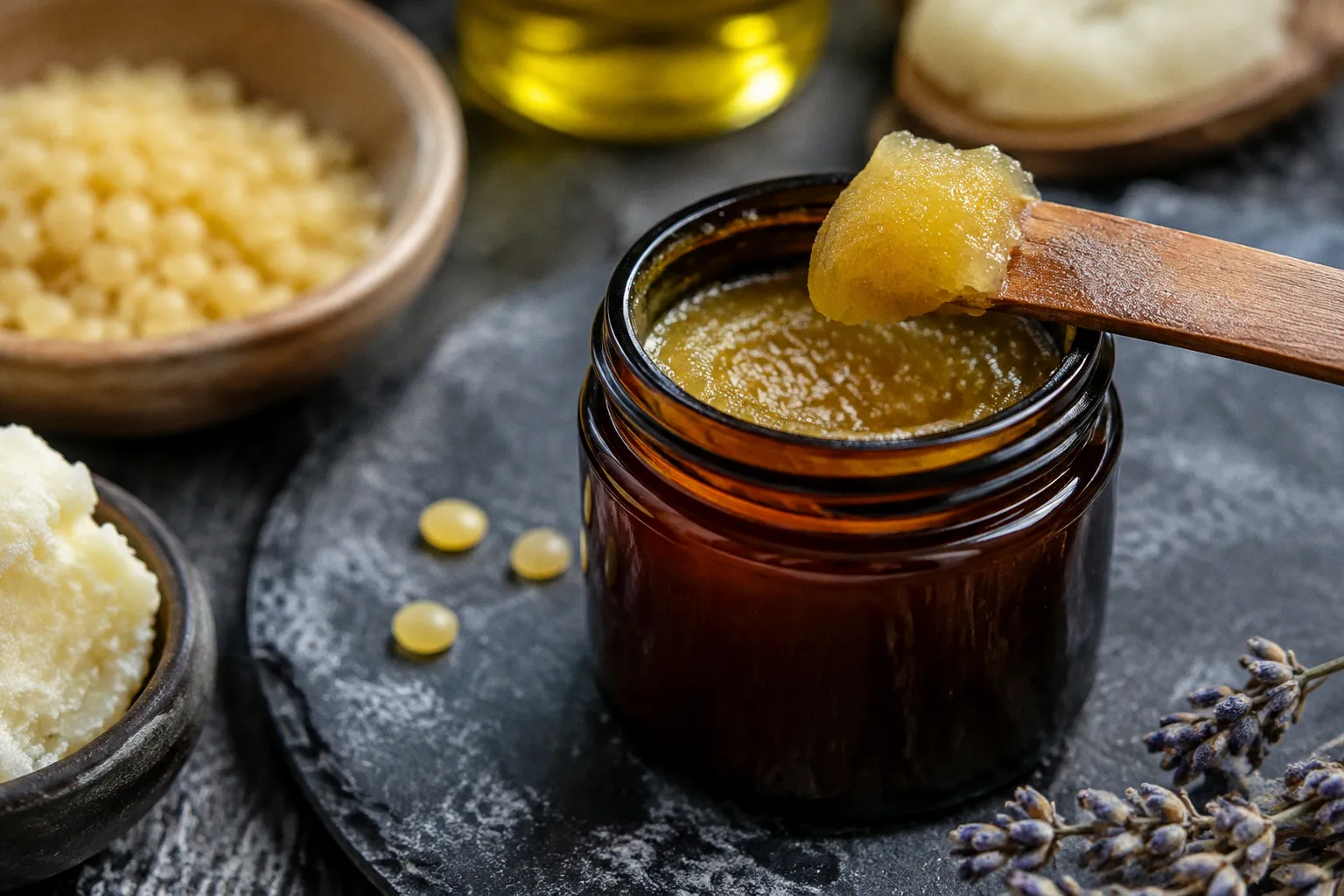
A soft, fragrant product may offer some conditioning but almost no control; a dense wax may shape the hair while leaving the skin underneath tight and uncomfortable. The word “artisan” does not settle that question. The ingredient list and the balance between its components do.
The most useful way to assess an artisan beard balm is to look for function rather than marketing language. Which ingredient gives the product structure? Which ones soften the beard and reduce friction? Is the formula designed for light grooming, serious shaping, or mainly skin comfort? Those questions are more revealing than the number of botanical names on the label.
A good ingredient list will not tell you everything. It may not reveal the exact percentage of each component, and labeling conventions differ between markets. It can, however, show whether the product has a coherent formulation and whether its claims match the materials inside the tin.
The Anatomy of a Quality Beard Balm: Core Component Categories
There is no single compulsory recipe for beard balm. A product can be anhydrous or contain a small water phase, use beeswax or another structuring wax, rely on one butter or several, and include essential oils or no fragrance at all. Still, most traditional beard balms are built around a few functional groups.
The important distinction is not whether every formula contains exactly the same ingredients. It is whether the formula contains components capable of delivering the functions the product promises.
A conventional anhydrous balm may include:
1. A structuring ingredient — often beeswax, but sometimes another wax or a blend of waxes. This gives the product its shape in the container and contributes to control on the beard.
2. Plant butters — such as shea, cocoa, or mango butter. They influence firmness, glide, richness, and the way the product behaves on hair and skin.
3. Carrier oils — jojoba, argan, sweet almond, sunflower, grapeseed, or other oils. These improve spreadability and provide emollient conditioning.
4. Optional fragrance materials — essential oils, fragrance oils, or no added scent. Fragrance is not a structural requirement, and an unscented balm can be perfectly well formulated.
5. Optional supporting ingredients — antioxidants, botanical extracts, powdered ingredients, or preservatives where the formula requires them. Their usefulness depends on the product design rather than on how long the ingredient list looks.
This is why a beard balm does not have to contain essential oils to be functional. Their usual role is sensory: they provide scent and can contribute certain secondary properties, but they do not create the balm’s hold. A fragrance-free product may be a better choice for sensitive skin, especially when the beard balm is applied close to the nose and mouth.
Likewise, a formula does not stop being a balm simply because it uses a wax other than beeswax. Beeswax is familiar and effective, but candelilla, carnauba, rice bran wax, sunflower wax, and other structuring materials can alter firmness and application feel. The label should be read as a formulation, not as a loyalty test to one ingredient.
A useful starting framework for a traditional balm is a combination of wax, butter, and liquid oil. Some formulas lean heavily toward oil and butter for a soft, conditioning finish; others use more wax for visible shaping and stronger control. There is no universal ratio that suits every beard, climate, or application. The right balance depends on the melting behavior of the wax, the hardness of the butters, the oils selected, and whether the maker is aiming for a balm, butter, or mustache-wax texture.
The question is not whether a beard balm follows one perfect recipe. It is whether each major ingredient has a clear job and whether the finished texture supports the product’s promise.
The ingredient list can still provide an early read. Named waxes, recognizable butters, and clearly identified carrier oils suggest a more transparent formula than vague phrases such as “conditioning complex” or “botanical blend.” That does not make a short list automatically superior, nor does a long list prove poor formulation. It simply gives you more information to work with.
Reading the order of ingredients without overreading it
In many cosmetic labeling systems, ingredients are generally listed in descending order of concentration, at least through the higher-concentration portion of the formula. But this is not a universal rule that works identically in every jurisdiction. Ingredients present at or below a low threshold, commonly around 1% in some systems, may be listed in a different order, and fragrance components follow their own conventions. Local labeling law matters.
That makes ingredient order useful but limited. If beeswax appears near the beginning of an anhydrous balm’s list, it is probably an important structural component. If it appears after several oils and butters, the product may be softer and less styling-focused. But the list alone cannot reveal the exact wax percentage or predict hold with certainty. Different waxes have different hardness and film-forming behavior, and the rest of the formula can amplify or soften their effect.
Water or aloe juice near the beginning of the list also does not automatically mean a product has weak hold. It may indicate an emulsion or a lighter cream-like formula, but hold depends on the complete system: waxes, polymers, butters, oils, emulsifiers, and the way the product dries on the hair. A label can point you toward questions; it cannot replace the finished product’s texture and performance.
Decoding Beeswax Concentrations for Styling and Hold
Beeswax is valued because it gives an anhydrous balm body, improves grip, and helps individual hairs stay closer to the shape into which they have been brushed. It also affects the practical experience of using the product: how firmly it sits in the tin, how much warming it needs, and whether the beard feels coated after application.
Its influence is not controlled by one universal threshold. A lower wax content can still provide light control, particularly when paired with other structuring materials or film-forming ingredients. A higher wax content can create stronger shape retention, but it may also make the product drag through the beard, feel heavy, or become difficult to distribute in cool weather.
For that reason, percentage bands should be treated as formulation examples rather than hard performance laws. A rough comparison looks like this:
| Relative wax level | Likely character | Where it may work well | Possible drawback |
|---|---|---|---|
| Low | Soft, easy-spreading conditioning balm | Short beards, flyaway control, users who dislike a coated feel | Limited shaping compared with a firmer balm |
| Moderate | Noticeable structure with workable glide | Daily grooming and medium-length beards | May need warming before application |
| High | Firm, more deliberate styling product | Longer or denser beards and defined shapes | Can feel stiff, drag, or leave more residue |
| Very high | Wax-forward product approaching a styling wax | Mustache shaping or strongly sculpted looks | Less comfortable as an all-over conditioning balm |
The same nominal wax percentage can behave differently from one product to another. Beeswax hardness varies by source and processing. A formula may also contain harder waxes that increase hold without increasing the beeswax percentage. Conversely, a generous amount of liquid oil or a soft butter blend can make a wax-rich balm feel more pliable.
The best practical clues are therefore combined ones:
- Position of the wax in the list: useful for understanding whether it is likely to be a major component, but not a precise percentage calculator.
- Presence of other waxes: these may be responsible for firmness or stronger styling performance.
- Butter-to-oil balance: a soft, oil-heavy base will usually feel more conditioning and less rigid.
- Instructions for use: a product that asks the user to warm a pea-sized amount thoroughly may be designed around a firmer structure.
- The stated purpose: “conditioning balm” and “strong-hold styling balm” are not interchangeable promises.
Refined and unrefined beeswax also create different sensory profiles. Refined beeswax is generally lighter in color and odor, making it easier for a fragrance blend to remain prominent. Unrefined beeswax may carry a mild honey-like note and a deeper color. Neither is automatically better. The relevant question is whether the choice suits the rest of the formula and the user’s expectations.
Climate matters as well. A balm that feels perfectly workable in a warm bathroom may become markedly firmer in a cold room. The reverse can happen in hot weather, when a soft formula loses the control it offered at cooler temperatures. A thoughtful product description should acknowledge this rather than promise identical hold in every season.
The Role of Plant Butters in Long-Lasting Moisture Retention
Plant butters are not simply decorative additions to a beard balm. They shape its consistency, glide, after-feel, and ability to leave a light protective film on the beard and the skin beneath it. They can reduce the rough sensation associated with dry facial hair, but they do not “add water” to the hair. Their main contribution is emollient and occlusive: they help soften the surface and slow moisture loss when the surrounding formula is well balanced.
Shea butter is popular because it gives a cushiony, substantial feel without being as hard as some high-melting butters. It can be useful in products intended for dry or easily irritated skin, although the finished formula matters more than the ingredient’s reputation alone. A balm containing shea butter may still feel heavy if the overall oil and wax balance is too rich.
Cocoa butter is firmer and more structured. It can add body and a smooth, protective feel, especially in a formula designed for coarse or longer hair. Its firmness can also make a balm harder to scoop and spread, particularly when combined with beeswax or other hard waxes. A formulator may offset that behavior with softer oils or a more yielding butter.
Mango butter is often chosen for a lighter, less dense sensory profile. It can help create a balm that spreads readily and leaves less of a pronounced coating on fine facial hair. That does not make it universally better; it simply makes it useful when the target is a softer, cleaner finish.
The practical choice is therefore about balance:
- Dry-feeling skin or a coarse beard: a richer butter phase may improve comfort and reduce the need to reapply oil during the day.
- Fine hair or a preference for a matte finish: a softer, lighter butter blend may be less likely to flatten the beard or create visible buildup.
- Cold conditions: harder butters and waxes can make the product more resistant to melting but also more difficult to work between the palms.
- Warm conditions: a softer butter and a carefully selected wax system may preserve spreadability without turning the balm into an oily paste.
The term “moisture retention” should also be handled carefully. A balm can help reduce the feeling of dryness by smoothing the hair surface and limiting some moisture loss, but performance depends on the condition of the hair, the skin, humidity, cleansing habits, and how much product is used. Applying more balm does not necessarily create more comfort. Beyond a certain point, it mainly adds weight and residue.
A blend of butters can provide a more balanced texture than a single-butter formula, but a single-butter balm is not automatically inferior. A focused formula can be easier to understand and may have a cleaner sensory profile. What matters is whether the butter’s firmness and feel make sense alongside the chosen wax and oils.
A balm’s conditioning feel comes from the relationship between wax, butter, and oil—not from the number of botanical names printed on the label.
Why Jojoba Oil Is a Strong Choice for Beard Conditioning
Jojoba is often described as an oil, but chemically it is a liquid wax ester. That difference helps explain its distinctive feel: it tends to spread smoothly, leaves a relatively dry finish compared with some heavier plant oils, and can contribute to a balm that feels conditioned without becoming immediately greasy.
Its composition has similarities to components found in human sebum, which is one reason it is widely used in facial and beard-care products. That similarity may make jojoba feel familiar and comfortable on the skin, but it should not be turned into a claim that jojoba controls the sebaceous glands or prevents the skin from adjusting its oil production. There is no sound basis for presenting topical jojoba as a guaranteed way to bypass a physiological feedback loop.
Nor should other facial oils be described as causing “dependence” or rebound dryness. Different oils can feel heavier, lighter, more occlusive, or more prone to oxidation, and some people may find a particular oil irritating or unsuitable. That is a matter of individual tolerance and formulation quality—not evidence that the skin stops producing sebum because it has been using an external oil.
Jojoba remains useful for more straightforward reasons. It has good spreadability, a relatively light sensory profile, and a strong track record in leave-in grooming products. For beard care, that can mean less drag during application and a smoother finish on the hair.
Other carrier oils bring different characteristics:
- Argan oil can add a light, silky feel and is often selected for formulas aimed at dry or coarse hair.
- Sweet almond oil is a familiar emollient that can improve glide and soften a dense butter-and-wax base. People with nut allergies should check the product information and choose accordingly.
- Grapeseed oil is relatively light and can help keep a balm from feeling overly rich, though its oxidation stability and the formula’s antioxidant system should be considered.
- Sunflower oil can provide economical, lightweight emollience; its performance depends on the grade and on how the product is protected from oxidation.
- Coconut oil can feel smooth for some users but may become firm in cooler conditions and may not suit everyone’s skin or preferred finish.
The position of jojoba on the ingredient list can offer a rough sense of its prominence when it appears in the higher-concentration portion of the list. It cannot prove that jojoba is the dominant conditioning oil, and it cannot tell you whether the formula will suit your skin. A balm with one carrier oil can work very well; a balm with six oils can still be poorly balanced.
For sensitive skin, fragrance may be a more relevant consideration than the choice between two familiar carrier oils. Essential oils can smell pleasant and can contribute to the character of a product, but they are not mandatory and may be irritating for some users. A fragrance-free balm with a simple oil-and-butter base may be the more sensible option when comfort is the priority.
Distinguishing Between Conditioning Balms and Styling Butters
The words “beard balm,” “beard butter,” and “styling balm” are not applied consistently across the grooming market. One maker’s beard butter may be a soft, whipped product with no wax; another may use the same name for a firmer leave-in conditioner. Product names are useful signals, but the texture, ingredients, and instructions are more reliable.
A traditional beard balm usually contains a meaningful structuring phase. That may be beeswax, another wax, or a blend. Its purpose is commonly divided between conditioning and light-to-moderate control. It should help the beard look tidier without behaving like a rigid adhesive.
A beard butter is usually softer and more conditioning-focused. It may contain only butters and oils or use a very small amount of wax. It is often easier to scoop, spreads quickly, and leaves less deliberate shape. That makes it suitable for short beards, overnight conditioning, dry-feeling skin, or anyone who dislikes a firm product.
A mustache wax sits further toward styling. It generally prioritizes grip and shape retention over all-over comfort. Using it through a full beard can create stiffness or buildup, while asking a soft beard butter to hold a curled mustache is likely to end in frustration.
| Feature | Conditioning beard balm | Beard butter | Mustache or styling wax |
|---|---|---|---|
| Main purpose | Softening with some control | Softening and surface comfort | Shape retention and definition |
| Structuring phase | Usually present at a meaningful level | Often absent or minimal | Usually dominant |
| Texture | Soft to firm, depending on formula | Whipped, creamy, or scoopable | Firm, tacky, or wax-heavy |
| Best use | Daily grooming and flyaway control | Lightweight conditioning or evening use | Mustache shaping and defined styles |
| Likely finish | Natural to lightly shiny | Matte to softly conditioned | More visible hold or coating |
| Application | Warm between fingers if firm | Usually spreads easily | Requires thorough warming and precise placement |
These categories overlap. A soft balm may condition almost like a butter while offering a little more control. A dense butter may hold short hairs in place even without a large wax phase. The point is not to force every product into a rigid category; it is to understand what the name is promising and whether the formula supports it.
Evaluating What the Ingredient List Actually Tells You
An ingredient list is most useful when read as evidence, not as a verdict. It can show whether the maker identifies the core materials clearly, whether fragrance is prominent, and whether the product appears to be wax-forward, butter-forward, or oil-forward. It cannot reliably reveal the exact percentages, the stability of the batch, or how the product will behave on a particular beard.
Names such as Cera alba for beeswax, Butyrospermum parkii for shea butter, and Simmondsia chinensis for jojoba may appear alongside common names, depending on the labeling system. Botanical or INCI names are not a warning sign by themselves. In fact, they can be more precise than broad marketing language. The concern is vague grouping that hides the material entirely.
When reading an artisan beard balm label, look for the following:
1. A clear structural ingredient. Beeswax is common, but another named wax may perform the same role. If no wax or comparable structuring material appears, the product may be a butter or oil blend rather than a traditional balm.
2. A recognizable butter phase. Shea, cocoa, mango, kokum, or another named butter can explain the product’s body and after-feel. A generic “moisturizing blend” gives less useful information.
3. One or more identifiable carrier oils. Jojoba can be a good choice, but it is not a compulsory quality marker. Other oils may suit the formula and the user just as well.
4. A fragrance disclosure that matches your needs. Essential oils are optional. If the product is scented, check whether the fragrance is likely to matter to your skin tolerance and whether the maker clearly identifies the fragrance system.
5. Instructions that match the texture. A firm balm should explain that it needs warming; a soft product should not promise the hold of a wax.
Ingredient order can help distinguish a wax-forward formula from an oil-forward one, but it should be interpreted cautiously. Rules vary by jurisdiction, and lower-concentration ingredients may not appear in strict descending order. A position near the end of the list is not a precise concentration reading. It is also not enough to conclude that the product has no styling value. The complete formula may contain other structuring agents, and performance depends on how those materials interact.
Claims such as “all natural,” “chemical-free,” or “free from synthetic ingredients” are poor substitutes for formulation information. Everything in a cosmetic formula is made of chemicals, and natural origin does not guarantee stability, gentleness, or effectiveness. A product can be beautifully made with natural materials and still be too heavily fragranced, too waxy, or unsuitable for a particular skin type.
The most practical evaluation combines the label with the intended use:
- For light daily grooming, look for a softer balm with a moderate conditioning phase and enough structure to reduce flyaways.
- For a dense or long beard, look for a firmer formula and clear guidance on hold, application, and reapplication.
- For dry-feeling skin, prioritize a comfortable butter-and-oil balance rather than simply choosing the product with the longest ingredient list.
- For sensitive skin, consider an unscented option and introduce any new product gradually.
- For a matte appearance, avoid assuming that a high butter content will always be invisible; the final finish depends on the oil blend, dosage, and hair type.
Artisan beard balm is not mysterious, but it is also not reducible to one magic ingredient. Wax influences structure. Butters shape richness and protective feel. Carrier oils determine glide and much of the after-feel. Fragrance materials are optional and should not be confused with performance. The balance between these elements is what separates a conditioning butter from a daily beard balm or a styling wax.
When choosing among products, start with the behavior you want: softness, control, shine, or a lighter finish. Then use the ingredient list to see whether the formula has a plausible path to delivering it. That is a more dependable approach to finding the right artisan beard balm ingredients to look for than trusting the tin, the label, or the word “artisan” on its own.